When choosing a battery for industrial equipment, electric vehicles, or forklifts, one of the most common questions is:
“Which is better, a lead-acid battery or a lithium battery?”
Each technology has its strengths and ideal use cases. In this article, we’ll compare lead-acid batteries and lithium-ion batteries in terms of performance, cost, maintenance, and lifespan to help you make an informed decision.
🔍 Overview: Lead-Acid vs. Lithium Batteries
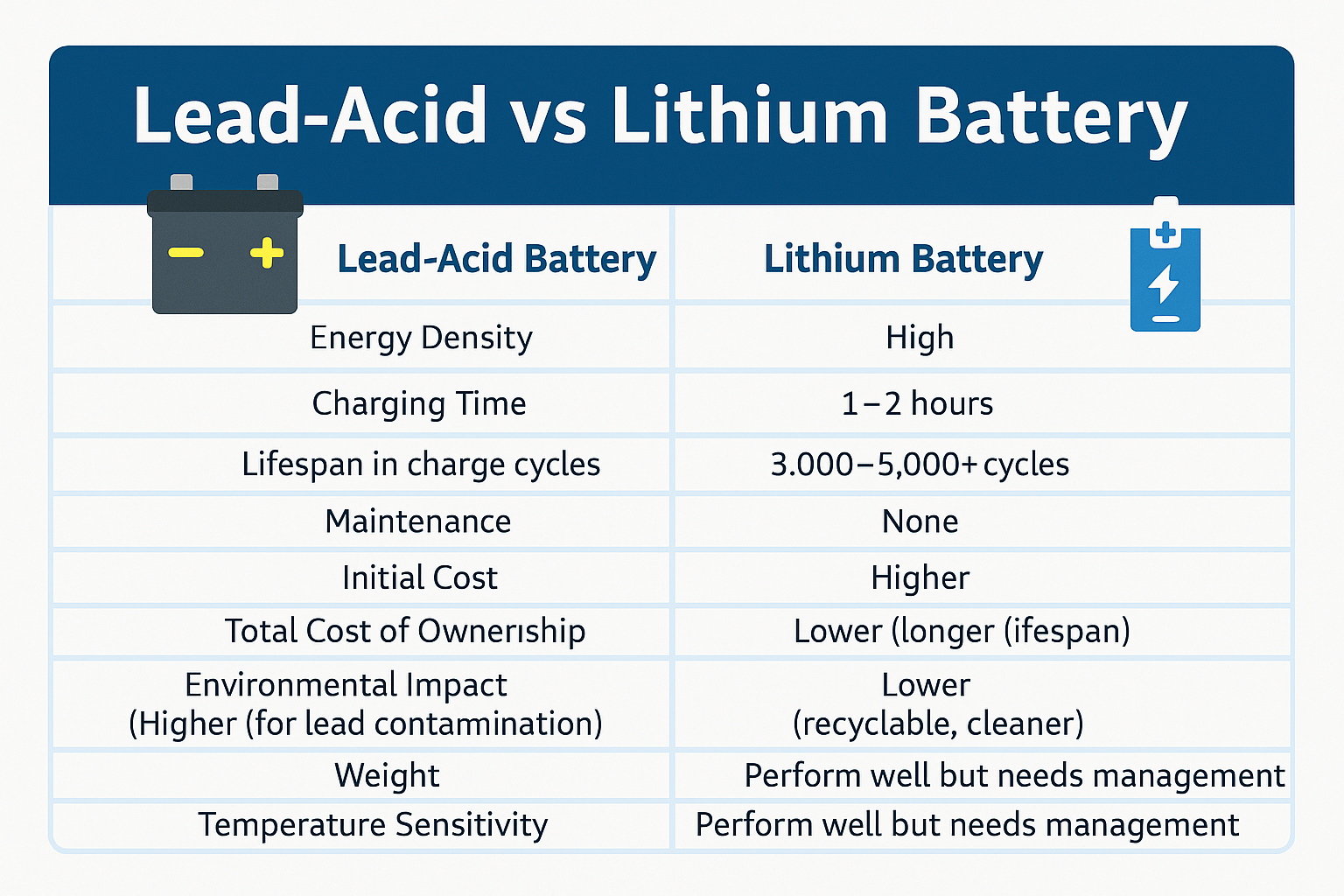
| Feature | Lead-Acid Battery | Lithium Battery |
|---|---|---|
| Energy Density | Low | High |
| Charging Time | 6–10 hours | 1–2 hours |
| Lifespan (Charge Cycles) | 1,000–1,500 cycles | 3,000–5,000+ cycles |
| Maintenance | High (watering, cleaning) | None |
| Initial Cost | Lower | Higher |
| Total Cost of Ownership | Higher (due to replacements) | Lower (longer lifespan) |
| Environmental Impact | Higher (lead contamination) | Lower (recyclable, cleaner) |
| Weight | Heavier | Lighter |
| Temperature Sensitivity | Better for very cold temps | Performs well but needs management |
✅ Advantages of Lead-Acid Batteries
- Lower Upfront Cost: Ideal for budget-conscious operations.
- Proven Technology: Trusted for over 100 years across industries.
- Good for Light-Duty, Single-Shift Use: Perfect for low-intensity applications.
Best for:
- Warehouses with low usage forklifts
- Operations with limited budgets
- Applications where charging time is not critical
⚡ Advantages of Lithium Batteries
- Faster Charging: Minimize downtime with quick 1–2 hour charging.
- Longer Lifespan: 2–4 times longer than lead-acid batteries.
- Zero Maintenance: No watering, cleaning, or acid spills.
- Opportunity Charging Friendly: Can be charged during breaks without affecting battery health.
- Higher Energy Efficiency: More power delivery with less energy loss.
- Environmentally Friendly: Lower carbon footprint and safer disposal.
Best for:
- Multi-shift warehouses
- High-usage, high-intensity environments
- Companies focused on long-term cost savings and sustainability
⚠️ Key Considerations When Choosing
- Budget: If upfront investment is limited, lead-acid may be acceptable for short-term use.
- Operational Demand: For intensive, multi-shift operations, lithium batteries are far more cost-effective.
- Maintenance Resources: Lead-acid requires routine maintenance, while lithium saves labor and time.
- Space Constraints: Lithium batteries require no large, ventilated charging rooms.
🏁 Conclusion: Which Is Better?
Lithium batteries are generally the better choice if you value efficiency, minimal maintenance, faster charging, and long-term savings.
Lead-acid batteries remain a solid choice if initial cost savings are critical and usage intensity is low.
Ultimately, the right battery depends on your operational needs, budget, and long-term goals.
🚀 Upgrade Your Fleet with Lithium Power!
Akuros offers high-performance lithium forklift batteries engineered for superior efficiency and durability.
📩 Contact us today for a customized energy solution that matches your business needs!