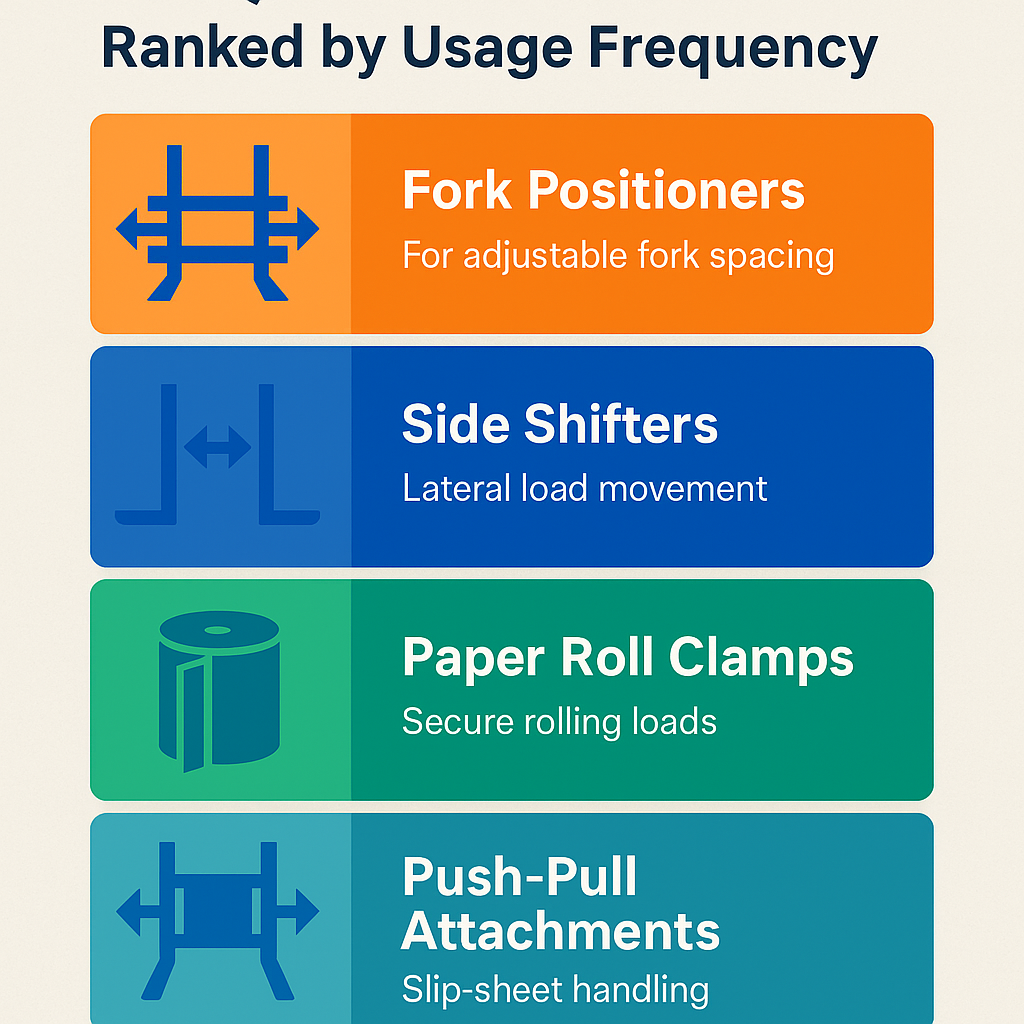
Forklift attachments can significantly boost your operational efficiency — from handling rolls and bales to managing multiple pallets or adjusting fork positions on the fly. But before putting any attachment to work, a series of safety and compatibility checks must be done.
In this guide, we’ll walk through the essential items to check before using an attachment on a forklift, to ensure safety, efficiency, and OSHA compliance.
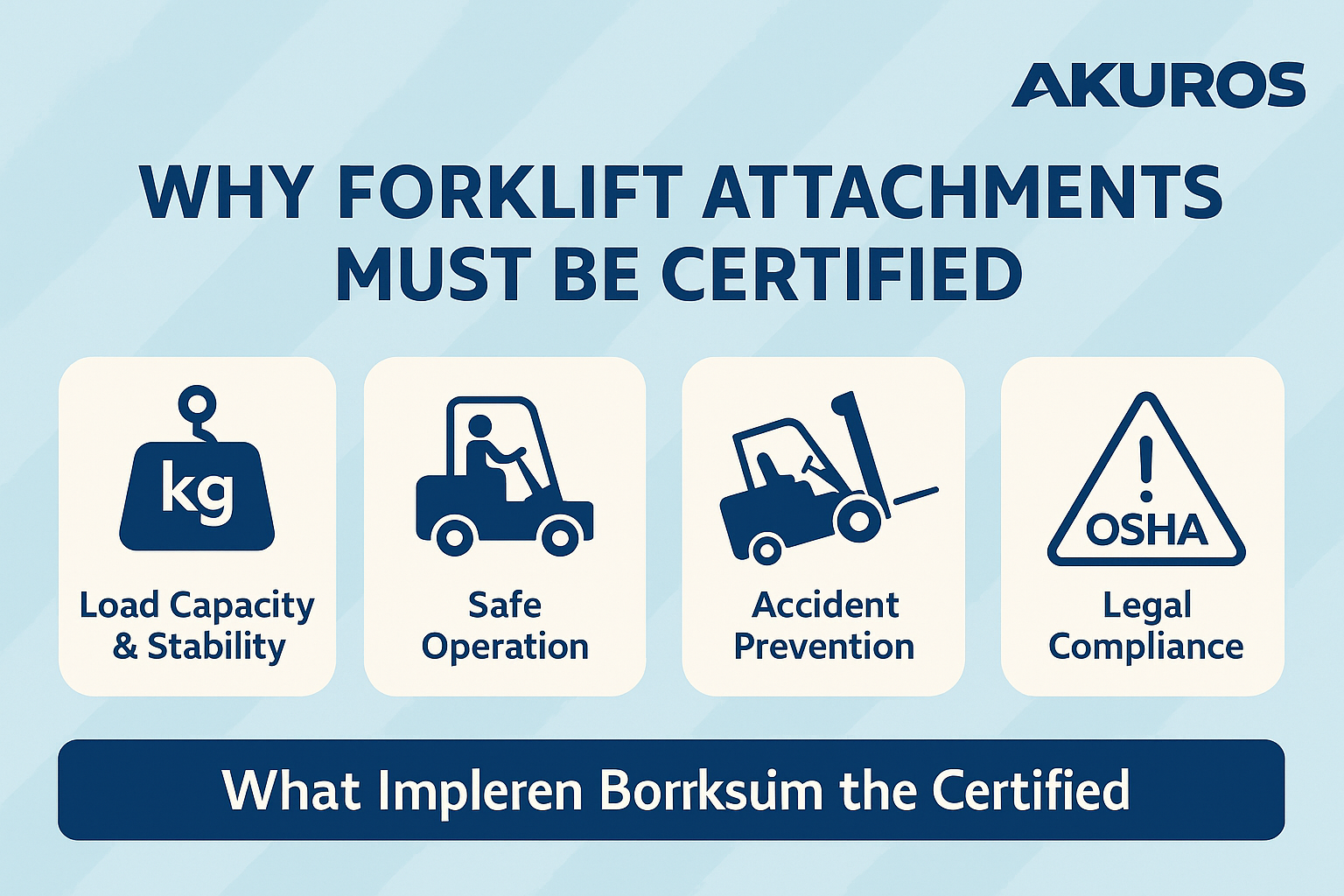
🔍 Why Is It Important to Check Before Using Forklift Attachments?
Attachments affect your forklift’s:
- Rated load capacity
- Load center and balance
- Visibility, maneuverability, and power consumption
Without the right checks, you risk:
- Forklift tipping accidents
- Damage to goods and infrastructure
- Non-compliance with safety standards
🧾 8 Things You Must Check Before Using an Attachment on a Forklift
1. Rated Capacity with the Attachment
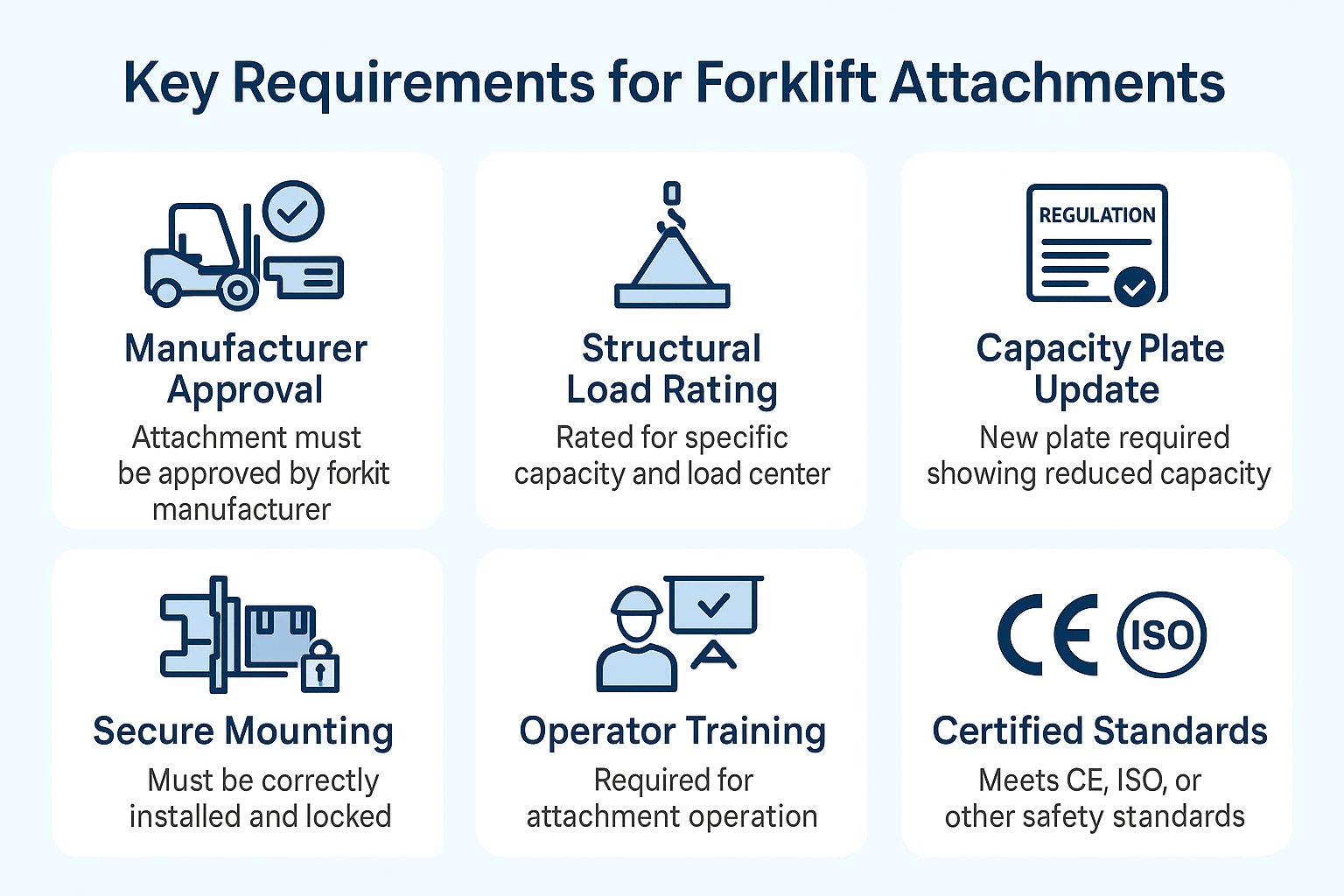
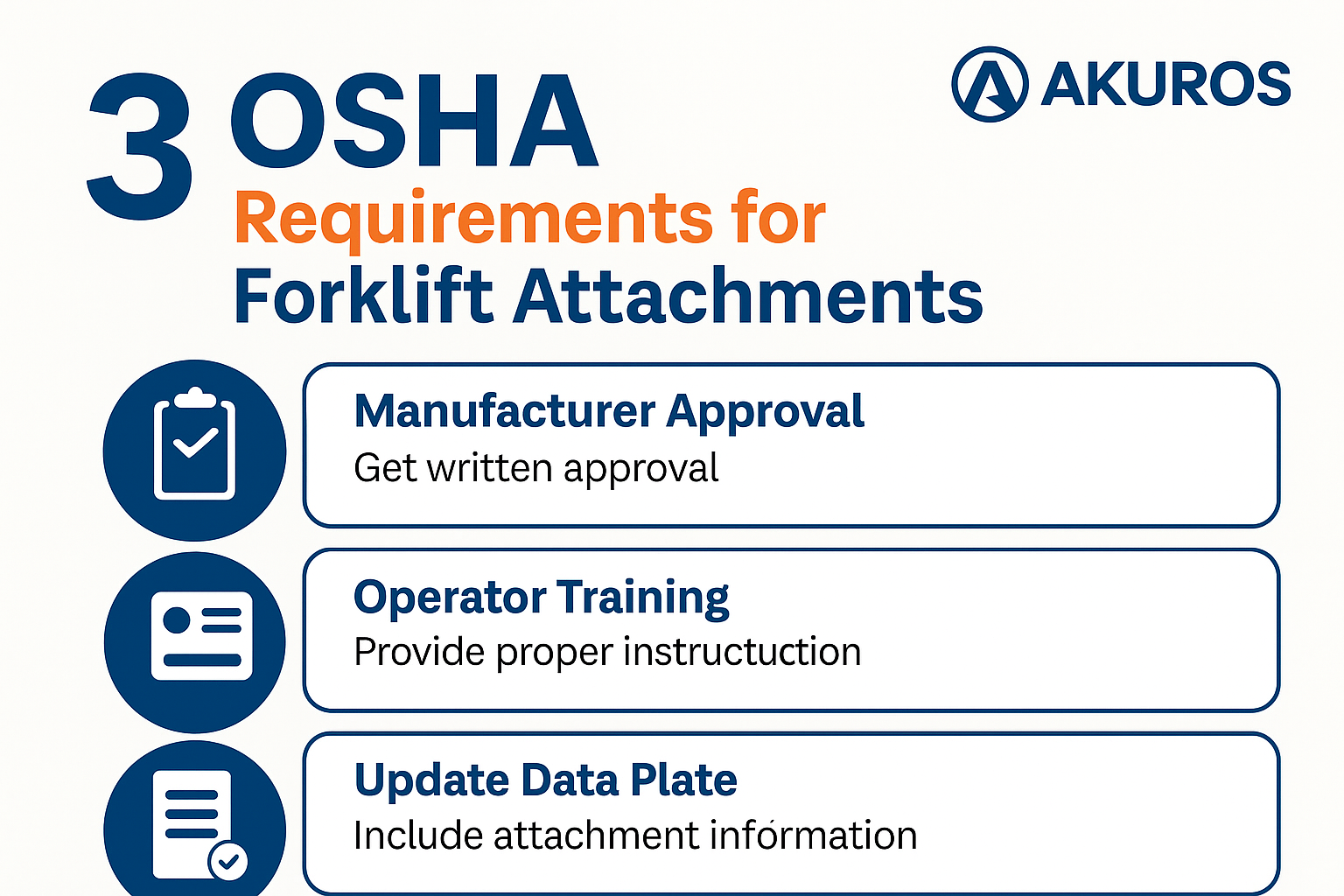
Check the updated data plate showing the forklift’s new lifting capacity with the attachment installed. Never assume the original rating still applies.
📌 Tip: If the capacity plate hasn’t been updated — stop and get it re-certified.
2. Attachment Type & Compatibility
Ensure the attachment is:
- ✅ Designed for your forklift model
- ✅ Properly mounted on the carriage
- ✅ Supported by your forklift’s hydraulic output and lift capacity
3. Secure Attachment Installation
Verify:
- All mounting bolts are tightened
- Hydraulic lines are securely connected and leak-free
- No visible damage, cracks, or bent parts
4. Hydraulic Functionality Check
Test:
- Open/close or rotate functions
- Hydraulic cylinder movement
- Pressure stability (no jerky or slow motion)
Leaking seals or slow response could signal hydraulic issues.
5. Updated Load Center Calculation
Attachments extend the load forward, shifting the load center. Make sure this new load center still fits within the forklift’s stability triangle.
6. Operator Visibility
Check if the attachment:
- Blocks the driver’s forward view
- Obstructs mirror or camera lines
✅ Install cameras or sensors if visibility is restricted.
7. Training & Certification
Ensure operators are trained to:
- Understand altered load capacities
- Use the hydraulic controls correctly
- Inspect the attachment before every shift
8. Brake & Steering Check
The added weight of an attachment affects:
- Braking distance
- Turning radius
Do a quick pre-use test to ensure safe handling under full load.
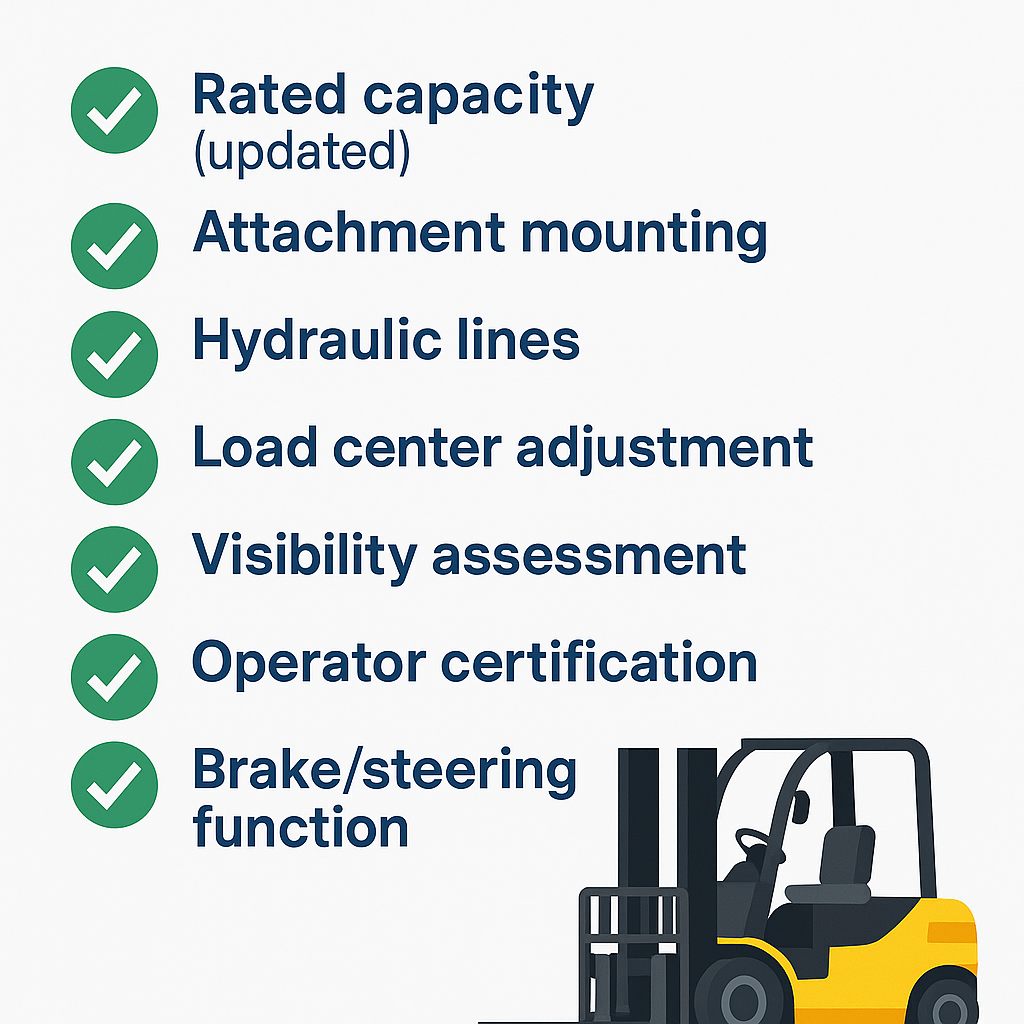
🛠️ Daily Pre-Use Checklist Summary
| Checkpoint | Why It Matters |
|---|---|
| Rated capacity (updated) | Prevent overloading |
| Attachment mounting | Avoid detachments |
| Hydraulic lines | Ensure safe and smooth movement |
| Load center adjustment | Maintain forklift balance |
| Visibility assessment | Prevent accidents |
| Operator certification | Legal and safety compliance |
| Brake/steering function | Guarantee safe control |
📦 Conclusion
Before using any forklift attachment, you must ensure:
- It’s compatible and properly installed
- Load limits are updated and understood
- Hydraulics, visibility, and control are safe
- Operators are trained and certified
These checks protect your team, your equipment, and your operation.
🚜 Need Certified Attachments?
Akuros provides CE/ISO-certified forklift attachments with full technical support, capacity labeling, and installation guidance. We help you maximize safety and performance — from day one.
📩 Contact us today to find the right attachment for your forklift.