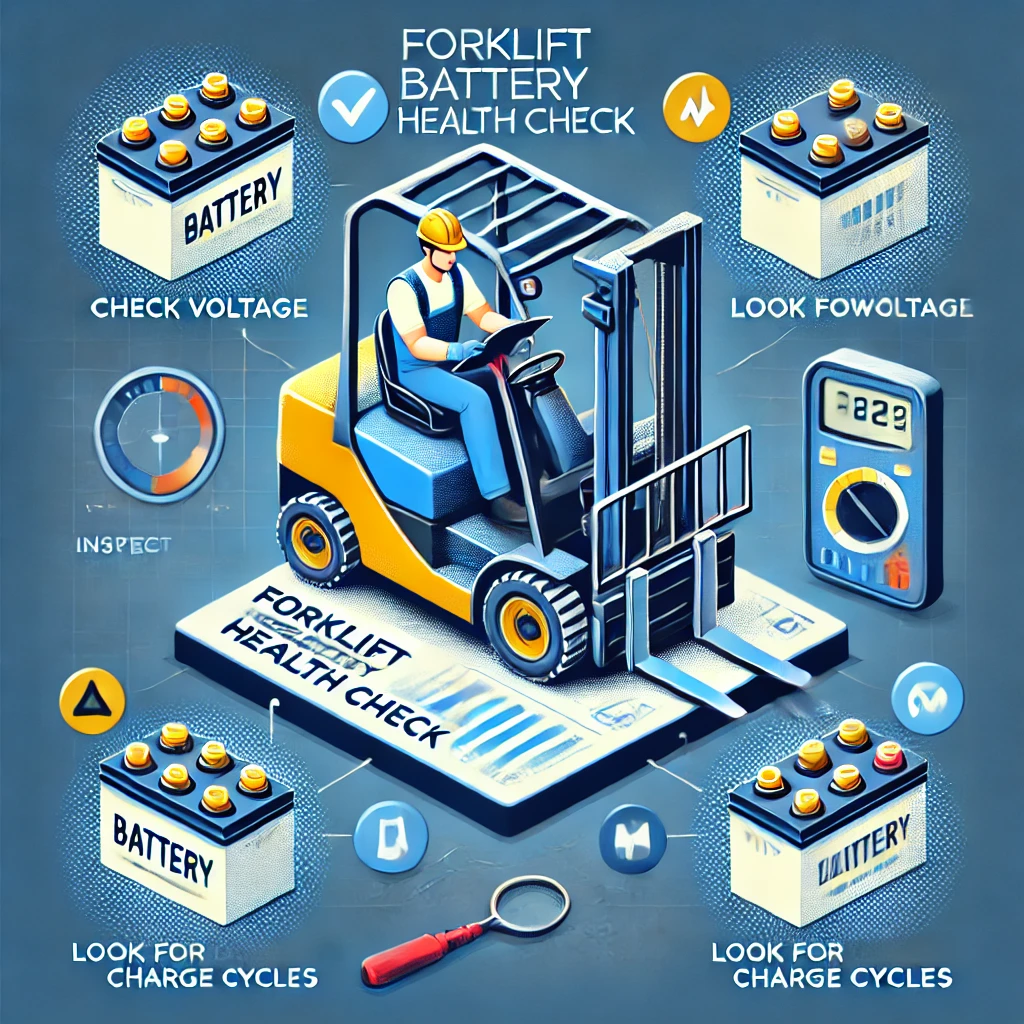
Forklift batteries are a vital part of warehouse operations, especially in electric forklifts. Ensuring your battery stays in good condition not only prolongs equipment life but also increases productivity. So, how do you check the health of your forklift truck battery? In this article, we’ll explore key methods and signs to help you monitor battery health effectively.
Why Battery Health Matters
A poorly maintained forklift battery can lead to:
- Shorter operating times
- Slower lifting performance
- Increased charging costs
- Costly unplanned downtime
By regularly checking battery health, you can prevent these issues and optimize performance.
1. Check Voltage Levels
Use a voltmeter or multimeter to measure the voltage of the battery. For a 36V or 48V forklift battery, a fully charged reading should be close to the rated voltage or slightly higher. If voltage drops significantly after a short period of use, it could indicate a weak or failing battery.
2. Perform a Load Test
A load test evaluates how the battery performs under working conditions. Using a load tester, apply a load equivalent to forklift usage and monitor voltage drop. If voltage dips below acceptable levels quickly, the battery may need maintenance or replacement.
3. Inspect Battery Appearance
Look for physical signs such as:
- Corrosion around terminals
- Swollen or cracked battery cases
- Leaking electrolyte
- Burn marks near connectors
These are clear indicators that the battery’s health is compromised.
4. Monitor Battery Water Levels
If you’re using a lead-acid battery, regularly inspect and refill distilled water to keep electrolyte levels above the battery plates. Low water levels can cause permanent damage.
5. Track Charge Cycles
Most forklift batteries are rated for a specific number of charge cycles (typically 1,200–1,500 for lead-acid; up to 3,000 for lithium-ion). Use your battery’s Battery Management System (BMS) or a manual log to track usage. If the battery is nearing its end-of-life cycle, it may begin to show performance issues.
6. Use a Battery Monitoring System
Modern forklift batteries often come with built-in BMS that provides real-time health data, including:
- State of charge (SOC)
- State of health (SOH)
- Temperature alerts
- Cycle history
Monitoring these parameters can provide early warning signs of degradation.
7. Check Temperature
Excessive heat shortens battery life. If the battery often runs hot during operation or charging, investigate ventilation and cooling solutions. Overheating can indicate overcharging or internal faults.
Conclusion
Regularly checking the health of your forklift battery can extend its lifespan, improve safety, and reduce operational costs. Use voltage checks, load tests, visual inspections, and battery monitoring systems to stay on top of battery performance. Whether you use lead-acid or lithium-ion forklift batteries, proactive maintenance is the key to a healthier fleet.