Forklift attachments are essential tools for improving versatility and productivity in material handling operations. Whether you’re using clamps, fork positioners, rotators, or push-pull units, attachments help your forklift do more than just lift and move pallets.
But with great capability comes great responsibility — attachments can significantly affect forklift performance, capacity, and safety.
In this article, we break down how attachments impact forklift operation and what you need to do to ensure safe and efficient use.
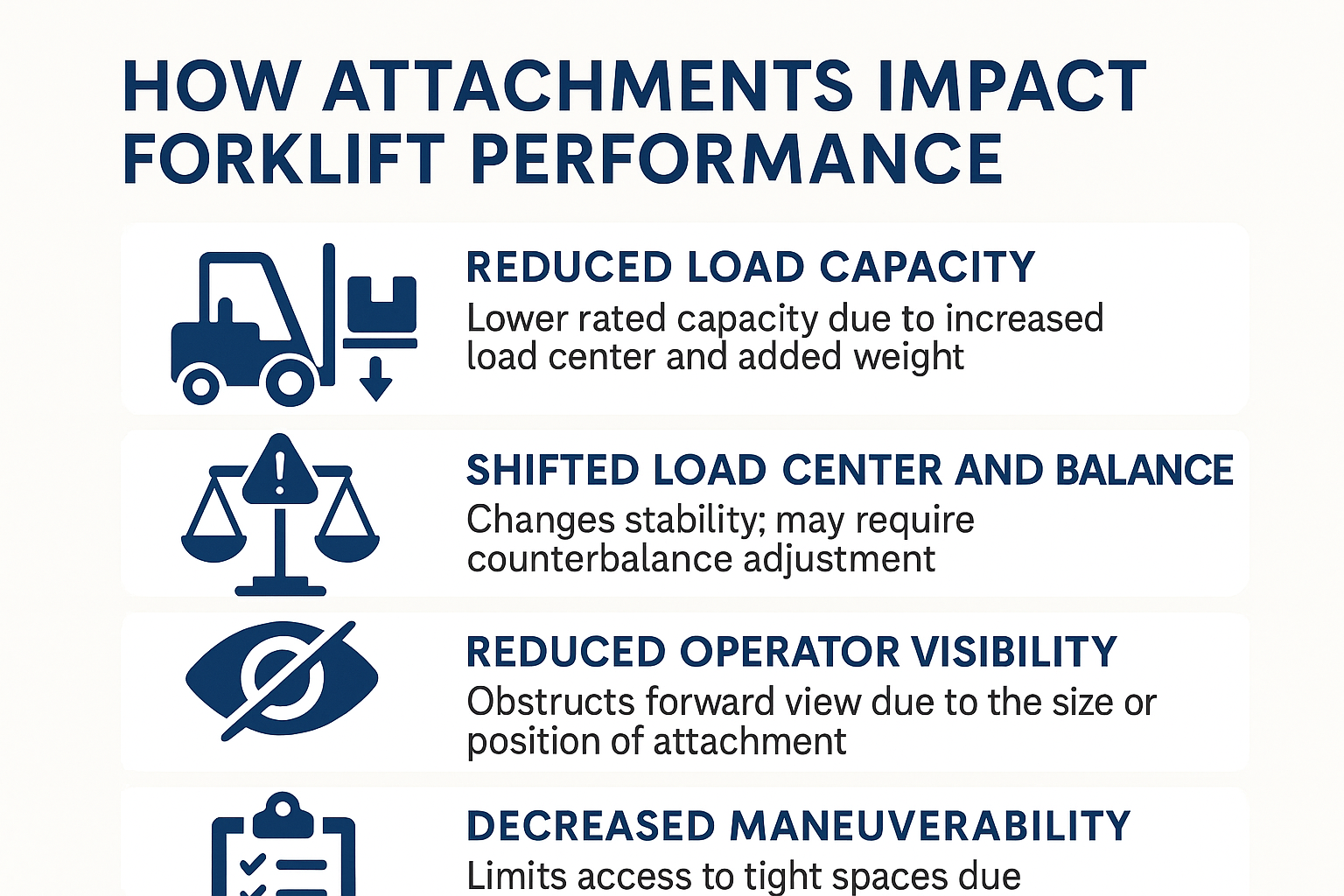
📉 1. Reduced Load Capacity
When an attachment is added, it increases the load center and adds extra weight to the forklift’s front end. This lowers the rated capacity of the forklift — sometimes by 20% to 50%.
📝 For example: A 3,000 kg-rated forklift may only handle 2,100 kg with a paper roll clamp attached.
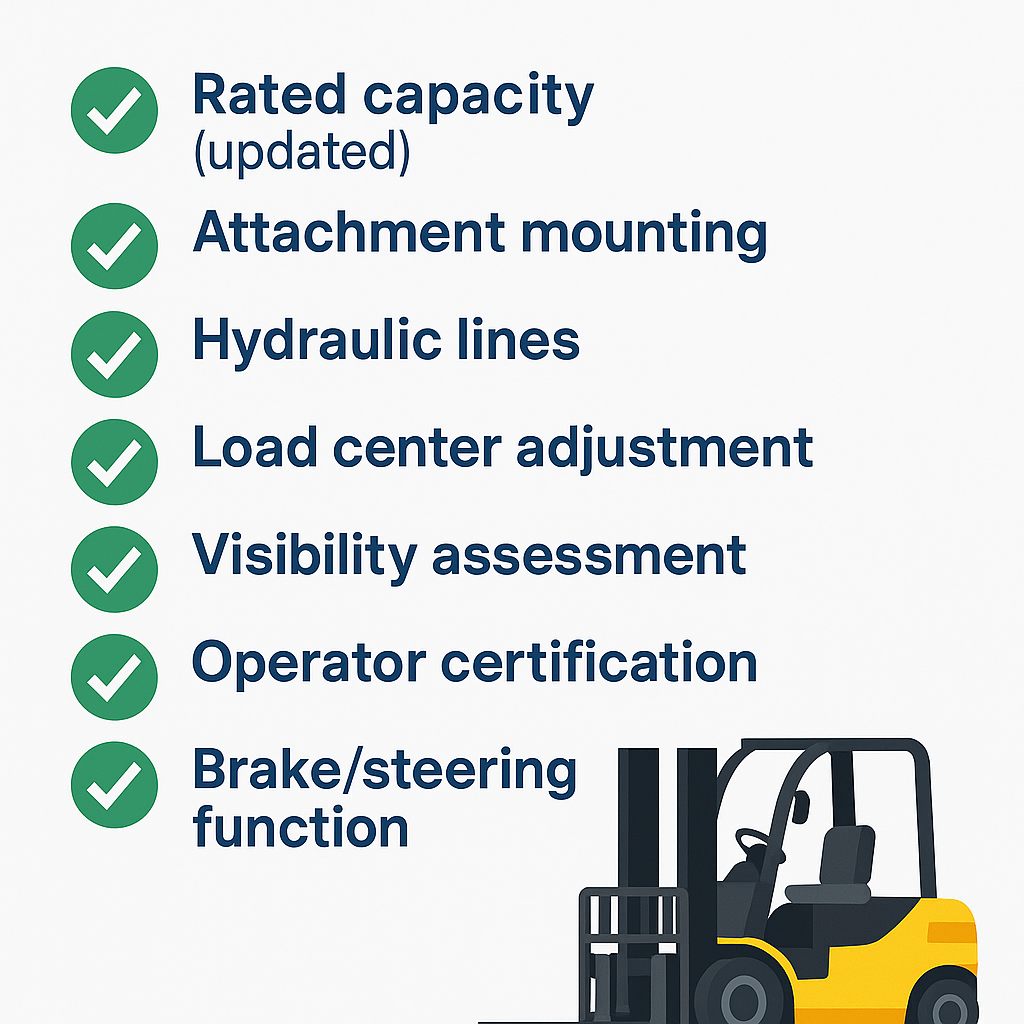
✅ Tip: Always refer to the forklift’s updated data plate and capacity chart after installing an attachment.
⚖️ 2. Shifted Load Center and Balance
Attachments change the load center distance, which affects forklift stability. A longer load center increases the risk of tipping, especially at higher lift heights or on inclines.
You may also need to adjust the counterbalance or switch to a forklift model designed to support attachments safely.
🕶️ 3. Reduced Operator Visibility
Some attachments — such as wide clamps or rotators — obstruct the operator’s forward view. This can lead to handling errors, safety risks, and slower operation.
✅ Solution: Equip forklifts with cameras, sensors, or train operators specifically on how to maneuver with restricted visibility.
🔄 4. Decreased Maneuverability
Attachments often extend the front end of the forklift and increase its turning radius. This limits the forklift’s ability to work in narrow aisles or tight warehouse spaces.
📌 Always account for the increased overall length and width when planning warehouse layouts or selecting racking systems.
🛠️ 5. Increased Maintenance Needs
Most attachments are powered by hydraulic systems and include moving mechanical parts. This increases the need for:
- Regular hydraulic system checks
- Seal and hose inspections
- Lubrication and preventive maintenance
Neglecting maintenance can lead to hydraulic failure, leaks, or safety hazards.
🚫 6. Safety & Compliance Concerns
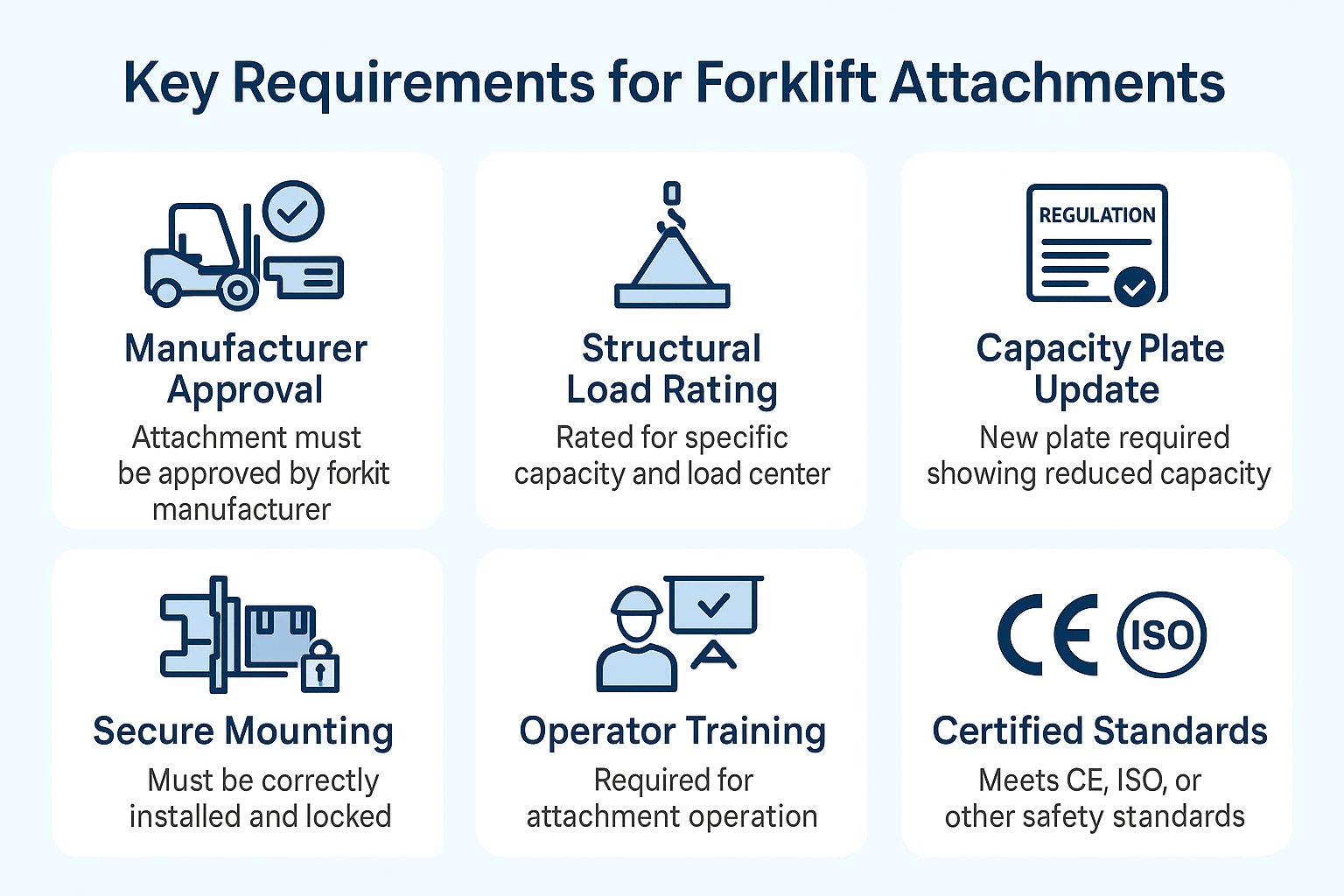
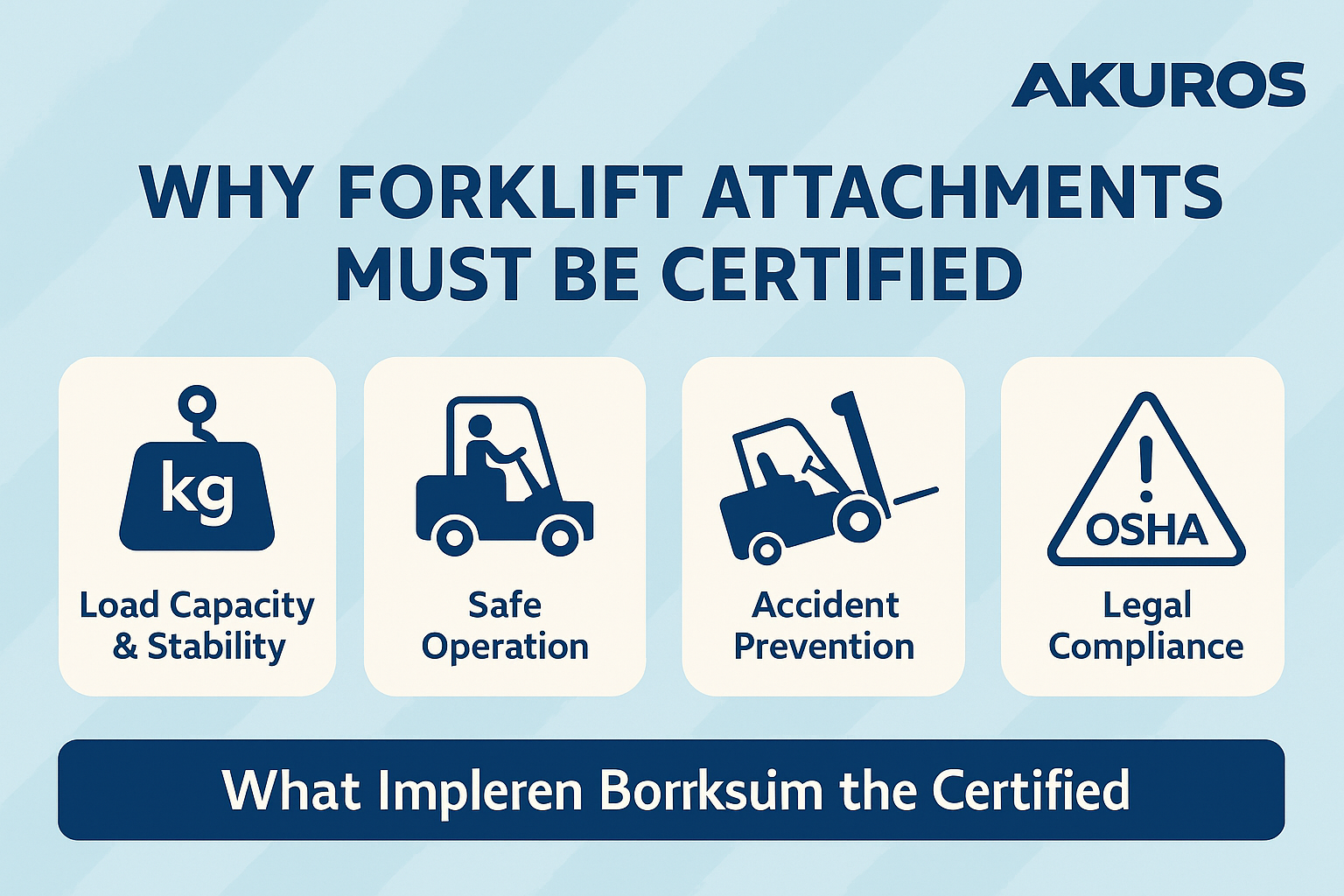
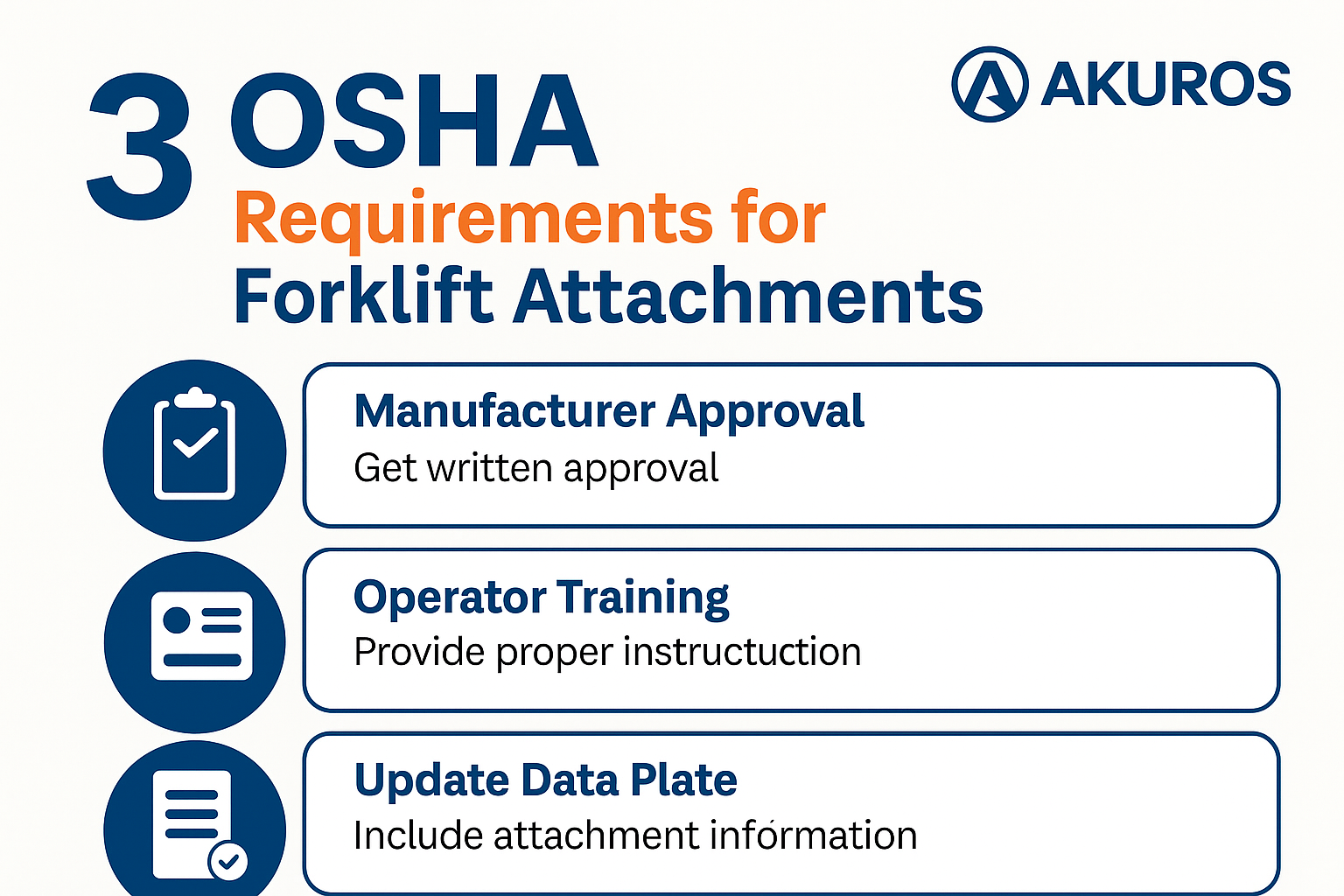
Adding an attachment without adjusting your forklift’s setup may violate OSHA or ISO safety standards.
Ensure your forklift is:
- Fitted with the correct derated capacity plate
- Operated only by trained personnel
- Inspected after each attachment change
✅ Summary: Attachments Are Powerful — Use Them Responsibly
Here’s how attachments affect a forklift:
| Impact Area | Description |
|---|---|
| Load Capacity | Reduces lifting capacity due to added weight and load center |
| Stability | Alters load balance, may require counterweights |
| Visibility | Obstructs operator’s view in some cases |
| Maneuverability | Increases turning radius, affects aisle access |
| Maintenance | Adds hydraulic and mechanical service needs |
| Compliance | Requires updated data plate and safety checks |
🧠 Choose the Right Attachment for Your Operation
Not all attachments are created equal. Make sure you:
- Select the right type based on your material and operation
- Verify compatibility with your forklift model
- Work with certified suppliers and get proper operator training
🔍 Looking for Certified Forklift Attachments?
Akuros supplies CE-certified forklift attachments designed to fit most global forklift brands. From paper roll clamps to fork positioners, we help you get the most out of your handling equipment — safely and efficiently.
📩 Contact us to customize a solution for your warehouse today.