If you’re upgrading your forklift with a clamp, rotator, fork positioner, or other attachment, one key question must be answered first:
Do forklift attachments need to be certified?
Yes — and it’s required for safety, legal compliance, and optimal performance.
In this article, we’ll explain why certification matters, what types of certifications are required, and how to ensure your attachments meet national and international standards.
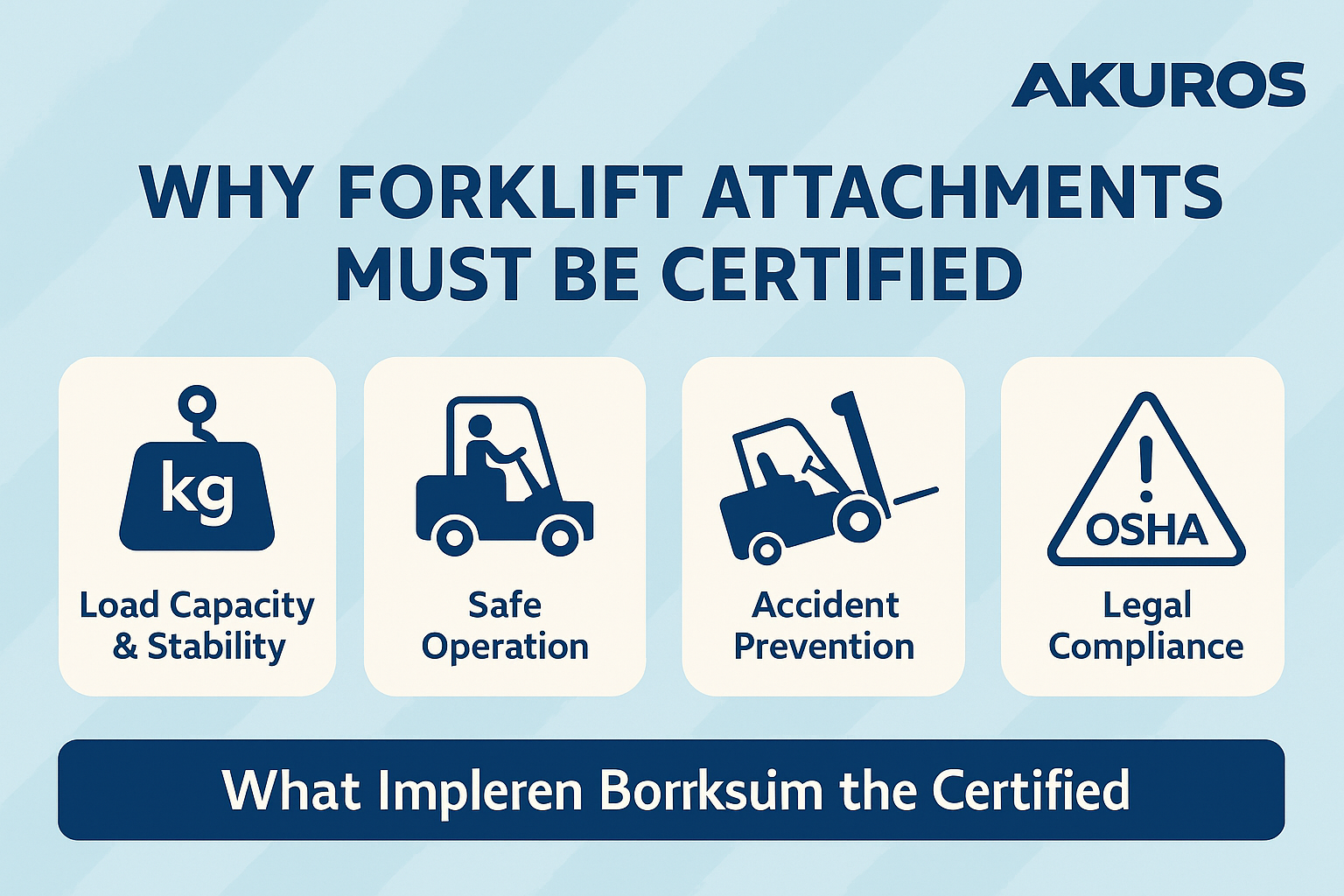
🔍 Why Forklift Attachments Must Be Certified
Forklift attachments directly impact:
- Load capacity and center of gravity
- Operator visibility and control
- Overall forklift balance and safe operation
Using uncertified attachments can lead to:
- Tipping accidents
- Equipment failure
- OSHA penalties or insurance claims denial
📜 What Certifications Are Required?
1. CE Certification (Europe and global markets)
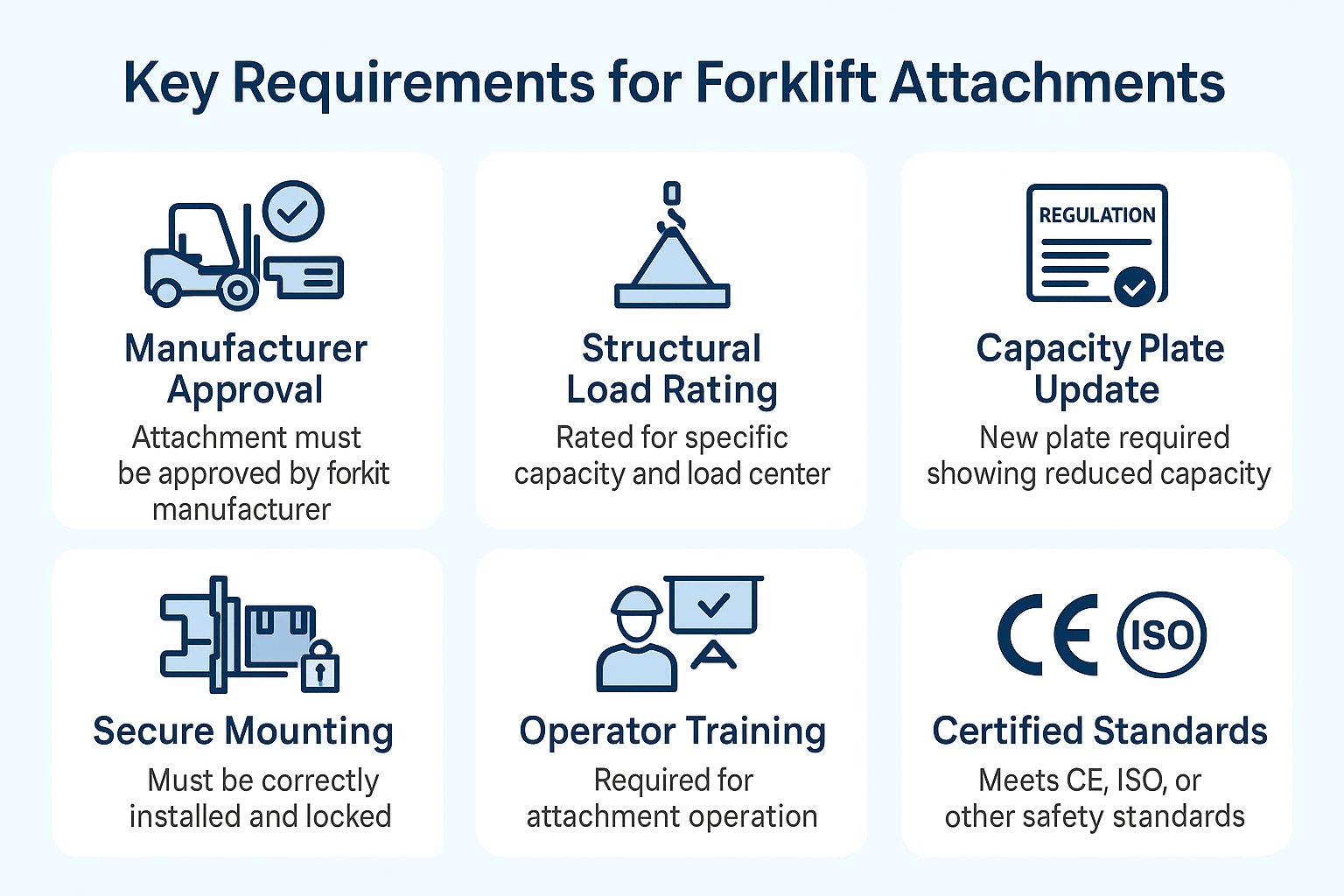
CE marks indicate compliance with EU safety and performance directives, including mechanical integrity, hydraulic safety, and manufacturing quality.
2. ISO Standards (Worldwide)
Relevant ISO standards for forklift attachments include:
- ISO 2328 – Fork arm and attachment mounting dimensions
- ISO 3691-1 – Safety requirements for industrial trucks
- ISO 3834 – Welding process compliance (especially for heavy-duty clamps)
3. UL Certification (North America)
Some attachments — particularly electrically powered ones — may require UL (Underwriters Laboratories) certification for electrical safety.
4. OEM Approval (Manufacturer Authorization)
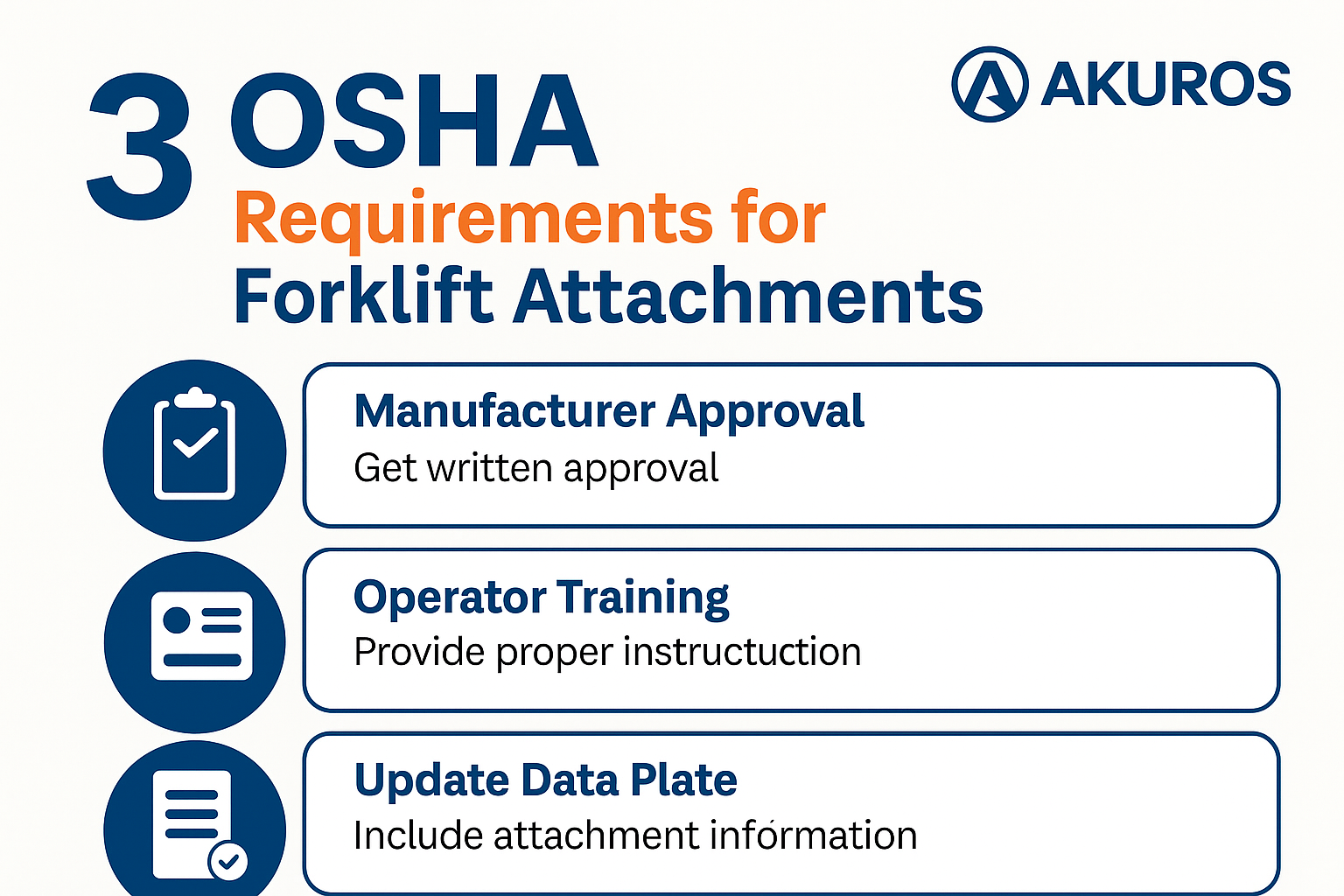
OSHA requires that any attachment installed must be approved by the forklift manufacturer or certified by a qualified engineer.
📌 OSHA Says: Attachments Must Be Approved & Labeled
Under OSHA Standard 1910.178(a)(4):
“Modifications and additions which affect capacity and safe operation shall not be performed without manufacturer’s prior written approval.”
You must:
- Use certified attachments only
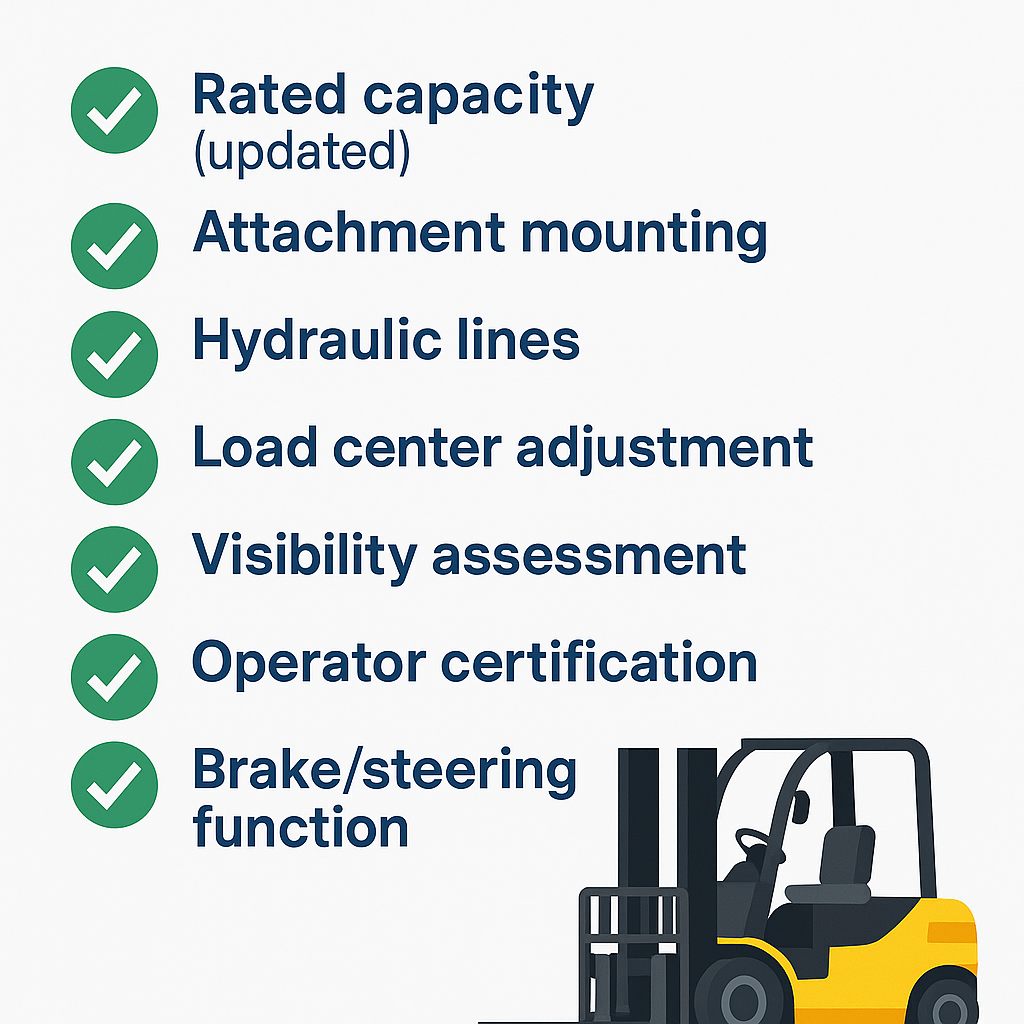
- Update the data plate with correct capacity after installation
- Train operators on attachment use and its effect on safety
🛠️ What Certification Ensures
Certified attachments are:
- ✔️ Made of high-quality, tested materials
- ✔️ Rated for specific weight/load centers
- ✔️ Tested under simulated operational stress
- ✔️ Safe to use in real-world forklift environments
- ✔️ Documented for warranty and compliance purposes
⚠️ What Happens If You Use Uncertified Attachments?
- ❌ Forklift derating is inaccurate (risk of overload)
- ❌ May void forklift manufacturer’s warranty
- ❌ Regulatory fines from OSHA or EU inspection bodies
- ❌ Higher liability in case of accidents or workplace injury
✅ How to Verify Attachment Certification
| Step | Action |
|---|---|
| Check manufacturer specs | Confirm CE / ISO / UL labels or certificates |
| Ask for documentation | Request test reports and compliance declarations |
| Look for data plate | Attachment should display model, serial number, and capacity info |
| Get OEM approval | Forklift manufacturer must authorize attachment compatibility |
🧠 Conclusion
Yes, forklift attachments must be certified. Certification ensures that the attachments:
- Comply with international safety standards
- Do not compromise forklift performance or stability
- Help you stay compliant with OSHA, ISO, and CE regulations
Don’t compromise safety or legality — always request certified attachments from a trusted supplier.
🚜 Need Certified Forklift Attachments?
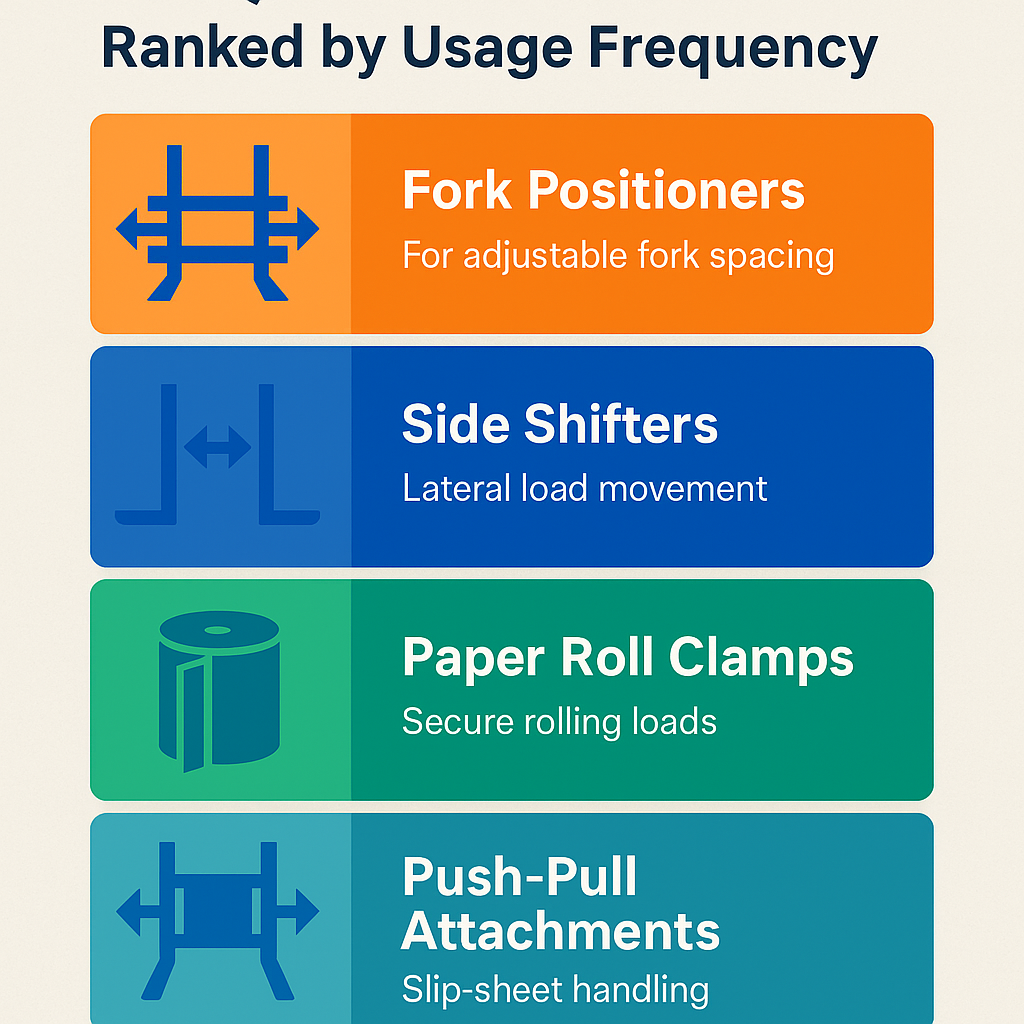
At Akuros, we offer a full range of CE/ISO-compliant forklift attachments — including push-pull units, rotators, clamps, fork positioners, and more. Every product is tested, approved, and ready for integration with major forklift brands.
📩 Contact us today for OEM-certified, safety-first attachment solutions.