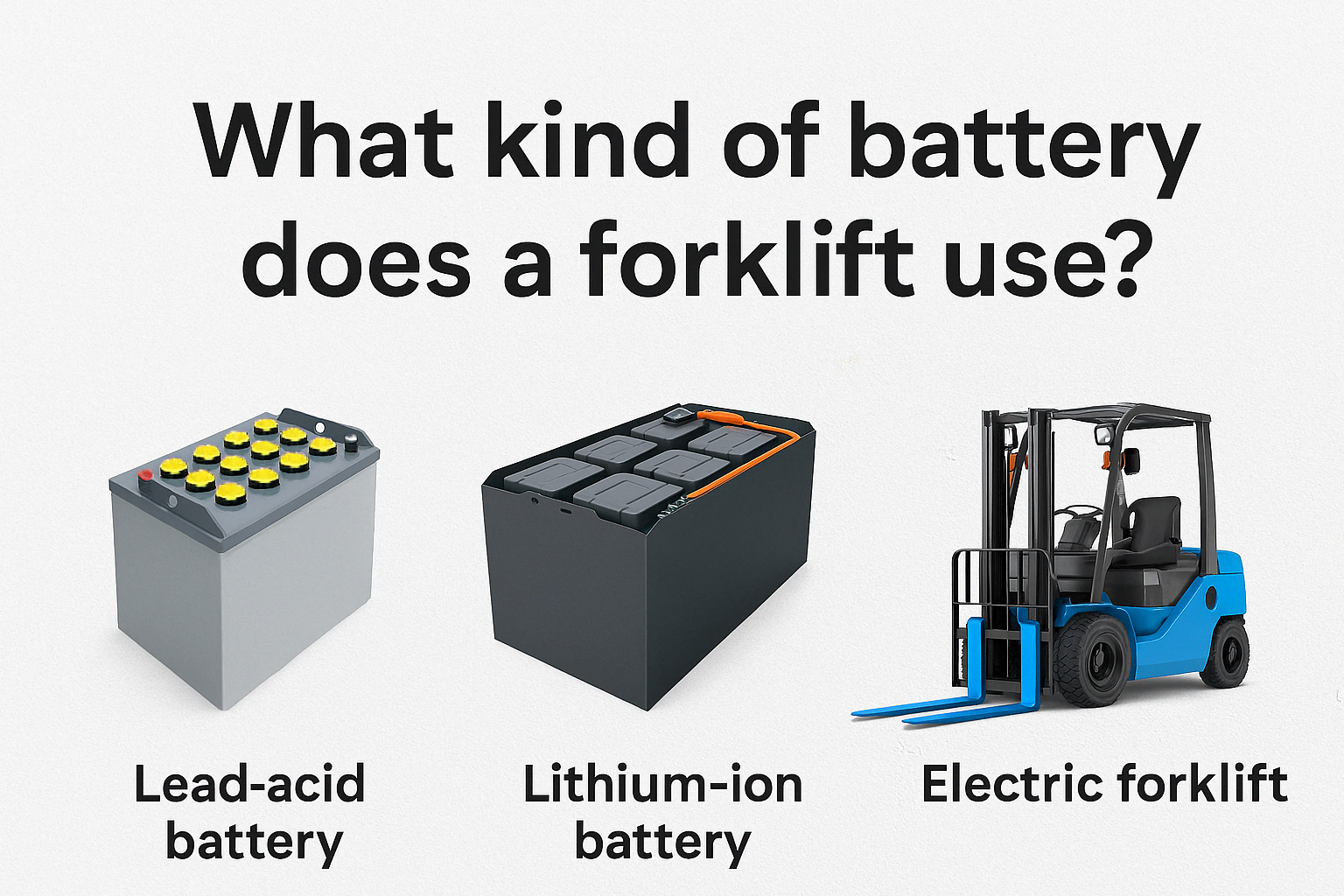
Forklifts are essential for material handling in warehouses, factories, and logistics operations. But what powers these machines? What kind of battery does a forklift use? The answer depends on the type of forklift and its specific application needs. In this article, we’ll explore the most common types of forklift batteries, their advantages, and how to choose the best one for your operation.
✅ The Two Main Types of Forklift Batteries
1. Lead-Acid Batteries
Lead-acid batteries have been the industry standard for decades. They use a liquid electrolyte to generate power through a chemical reaction between lead plates and sulfuric acid.
Key Features:
- Cost-effective upfront
- Reliable for basic warehouse tasks
- Requires regular maintenance (watering & cleaning)
- Charging time: 8–10 hours
- Lifespan: 1,000–1,500 charge cycles
Best For: Standard forklifts used in single-shift operations.
2. Lithium-Ion (Li-ion) Batteries
Lithium-ion batteries are a newer, high-efficiency solution offering superior performance and lower maintenance.
Key Features:
- Fast charging (1–2 hours)
- Zero maintenance
- Longer lifespan (3,000–5,000 cycles)
- Higher energy efficiency
- Higher upfront cost, lower lifetime cost
Best For: Multi-shift operations, high-demand applications, cold storage, and businesses looking to reduce downtime and operating costs.
🔍 Choosing the Right Forklift Battery
When selecting a battery for your forklift, consider the following factors:
- Operating Hours: For extended or multi-shift use, lithium-ion is often the better choice.
- Maintenance Capacity: If your team can’t handle battery watering and maintenance, lithium-ion is a hassle-free option.
- Budget: While lead-acid batteries are cheaper initially, lithium-ion offers better long-term ROI.
- Charging Infrastructure: Lead-acid requires dedicated charging rooms; lithium-ion batteries do not.
🏷 Common Forklift Battery Voltages
Forklift batteries are also categorized by voltage, typically based on the size and power requirement of the forklift:
- 24V – Electric pallet jacks, small walkie stackers
- 36V – Mid-sized forklifts
- 48V – Larger forklifts, counterbalance trucks
- 80V and 96V – Heavy-duty electric forklifts
🌱 Sustainability Matters
Lithium-ion batteries are more environmentally friendly than lead-acid. They produce less waste, are recyclable, and improve energy efficiency—making them a top choice for companies focused on sustainability.
📦 Final Thoughts
So, what kind of battery does a forklift use? The answer lies in your operation’s size, budget, and performance needs. Whether you choose the traditional lead-acid battery or a modern lithium-ion power system, understanding the pros and cons is key to maximizing productivity and cost-effectiveness.
💡 Looking to Upgrade?
At Akuros, we provide high-performance lithium forklift batteries that deliver fast charging, long life, and zero maintenance. Contact us today to explore the best energy solution for your forklift fleet!