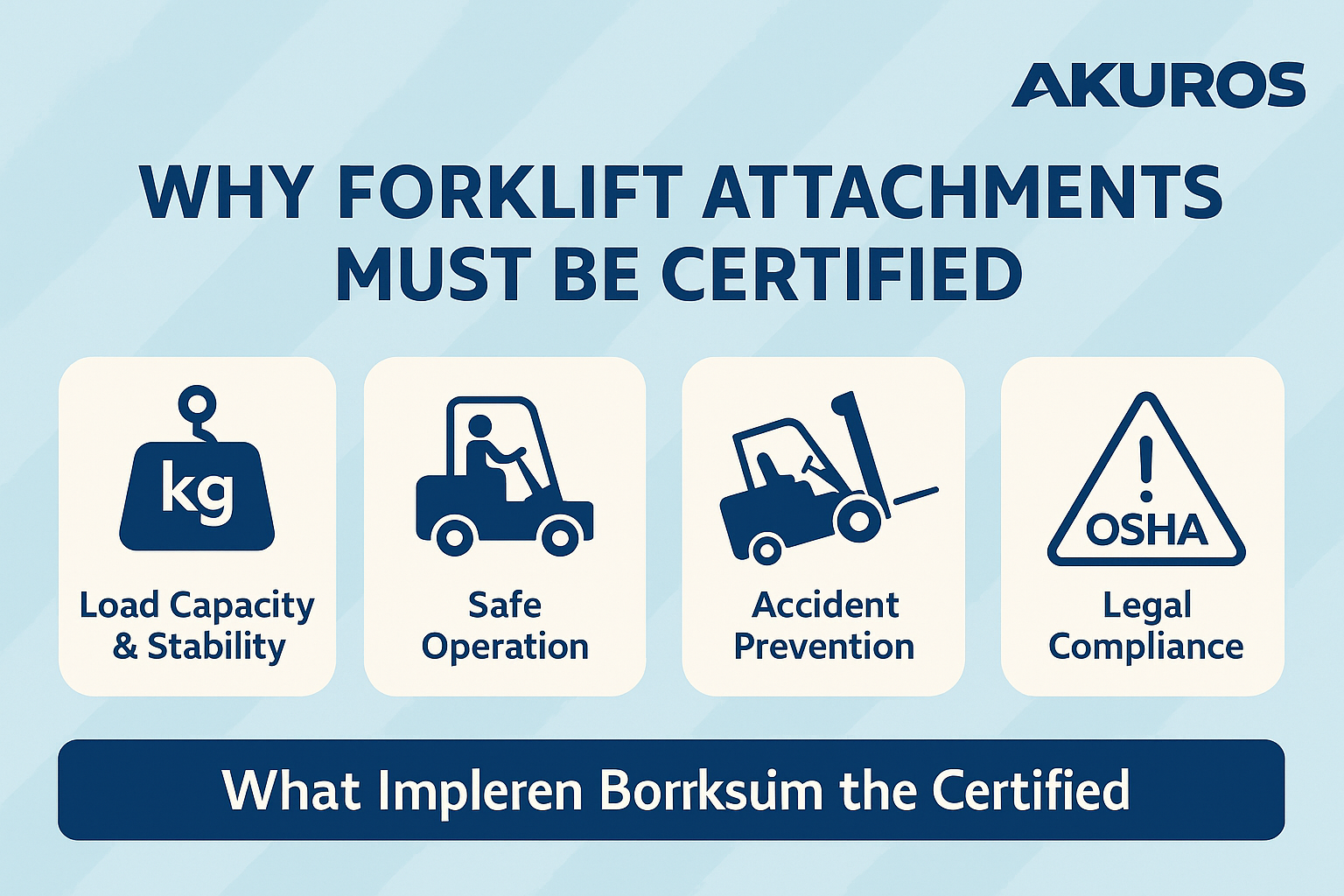
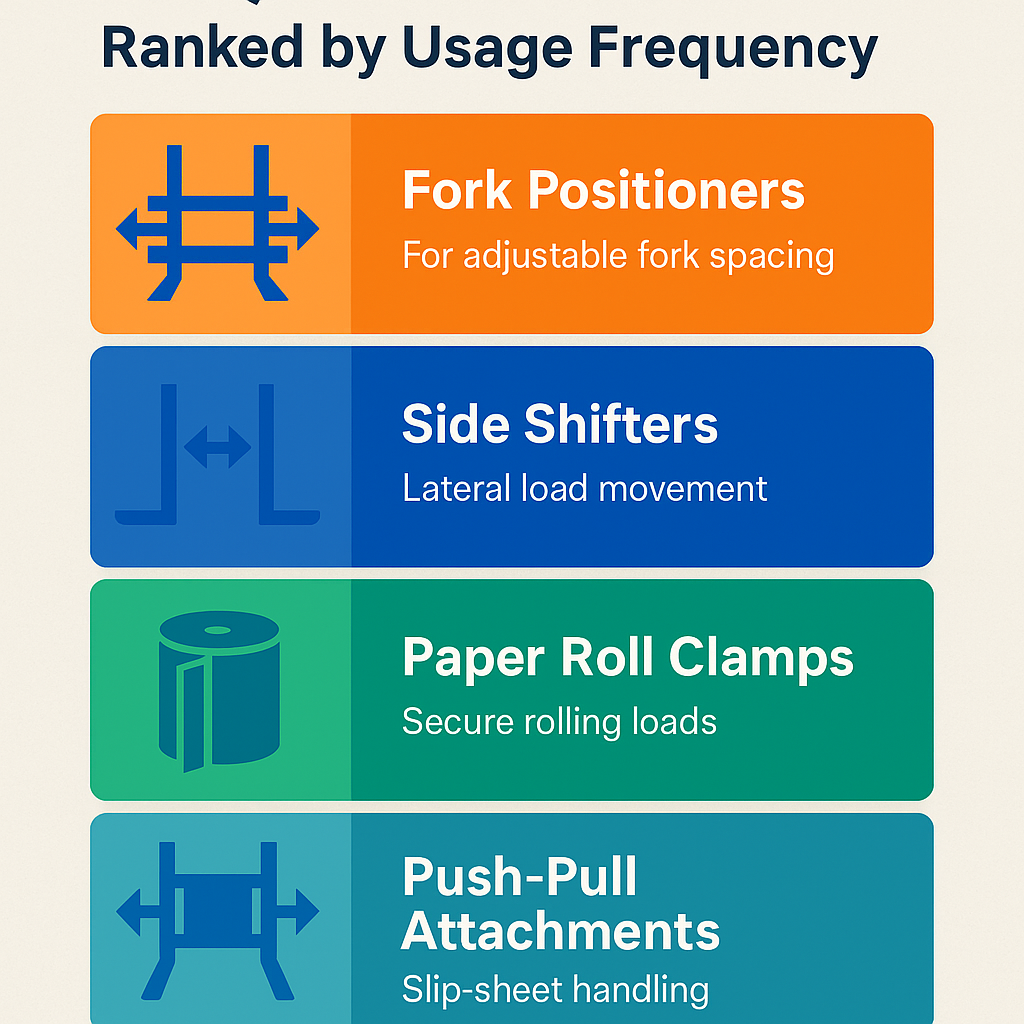
Forklift attachments greatly enhance material handling efficiency — from lifting odd-shaped items to moving multiple pallets at once. But before you modify a forklift with a clamp, rotator, or push-pull attachment, there’s one crucial thing to consider: OSHA compliance.
So, what does OSHA say about forklift attachments? Let’s break down the official guidance, safety requirements, and what your company must do to stay compliant and safe.
⚖️ What Is OSHA?
OSHA stands for the Occupational Safety and Health Administration — a division of the U.S. Department of Labor. OSHA sets and enforces safety regulations to ensure workplace safety, including rules for powered industrial trucks (e.g., forklifts).
The primary regulation is:
OSHA Standard 29 CFR 1910.178 — This covers forklift operation, maintenance, training, and attachments.
📦 OSHA Rules on Forklift Attachments
Here are the most important OSHA regulations regarding attachments:
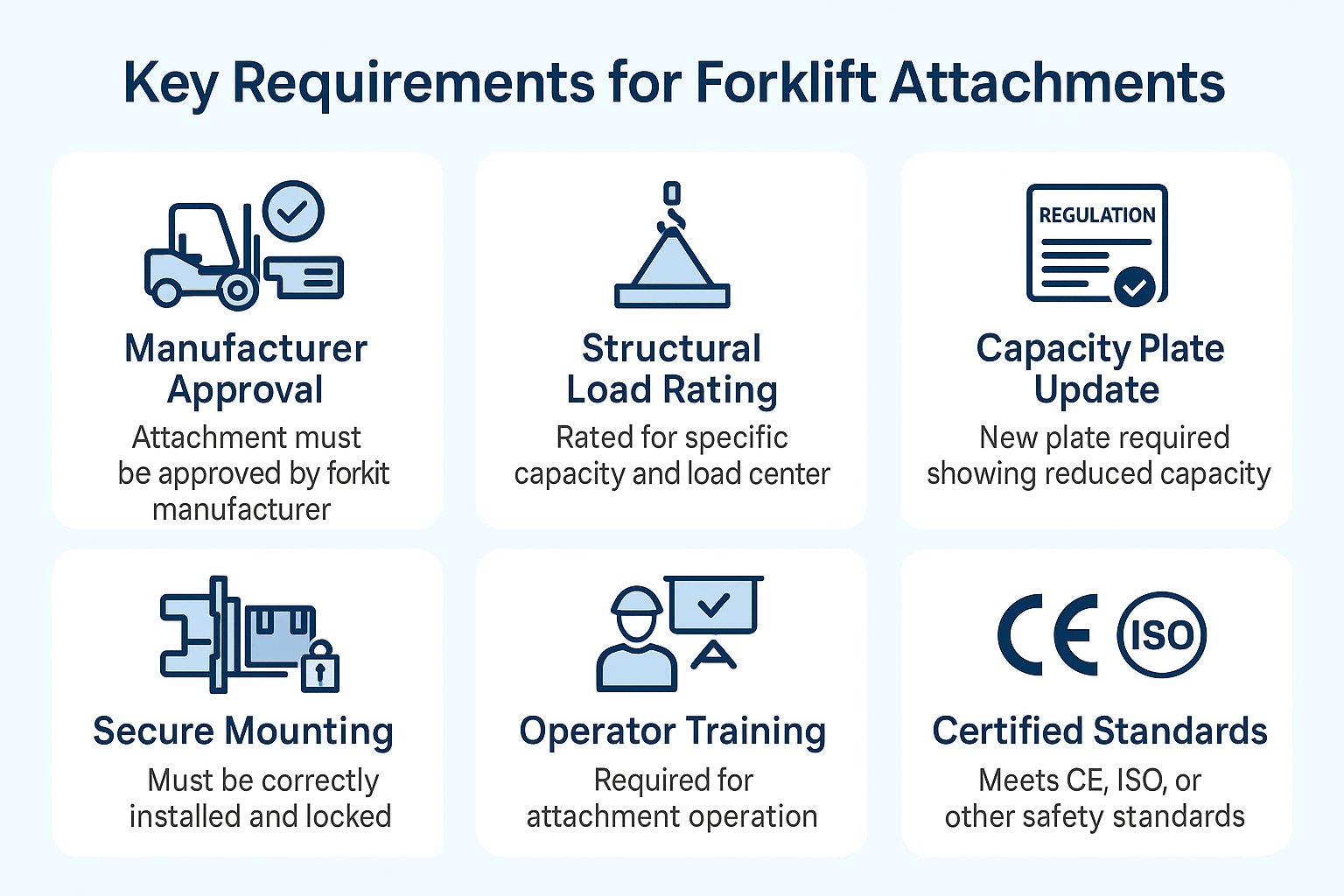
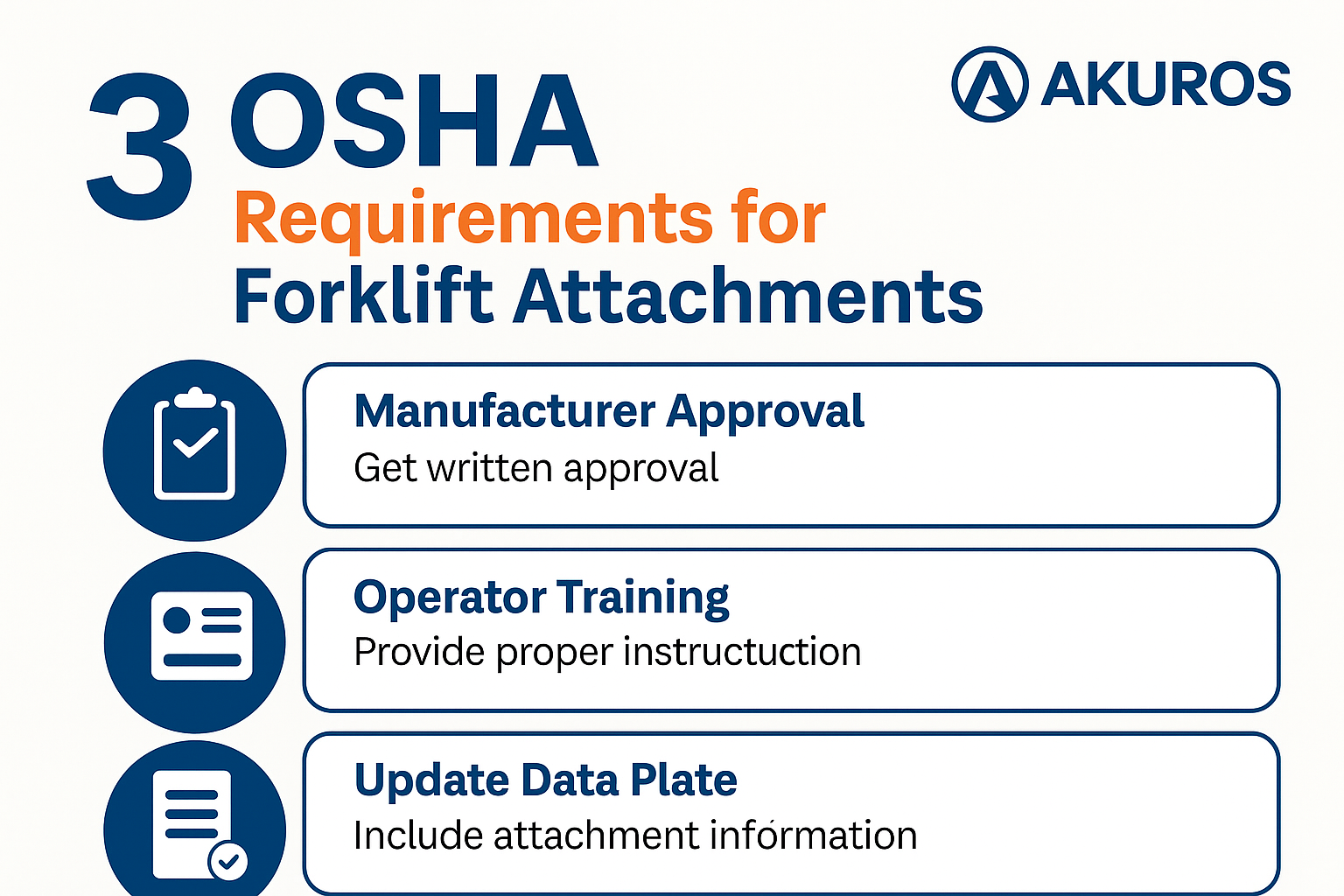
1. Attachment Use Requires Manufacturer Approval
🔍 OSHA 1910.178(a)(4):
Modifications and additions which affect capacity and safe operation shall not be performed without the manufacturer’s prior written approval.
That means:
- You must get written approval from the forklift manufacturer before installing any non-original attachment.
- The new rated capacity must be updated based on the attachment’s effect on lifting limits.
✅ Pro Tip: If manufacturer approval is not available, a qualified engineer must evaluate and certify the attachment installation.
2. Updated Capacity Plate Required
🔍 OSHA 1910.178(a)(5):
If modifications change the capacity, a new capacity plate must be attached.
Any added attachment will affect:
- Load center distance
- Overall lifting capacity
- Weight distribution
The data plate must reflect:
- Attachment weight
- New load capacity
- Adjusted load center
3. Operator Training Must Include Attachment Use
🔍 OSHA 1910.178(l)(3)(i)(G):
Operators must be trained on any attachments used and their impact on handling.
Operators should know:
- How the attachment works
- How it affects visibility, balance, and braking
- How to inspect the attachment before use
📚 Training must be documented and repeated at least every 3 years.
4. Daily Inspections Must Include Attachments
🔍 OSHA 1910.178(q)(7):
Industrial trucks shall be examined before being placed in service.
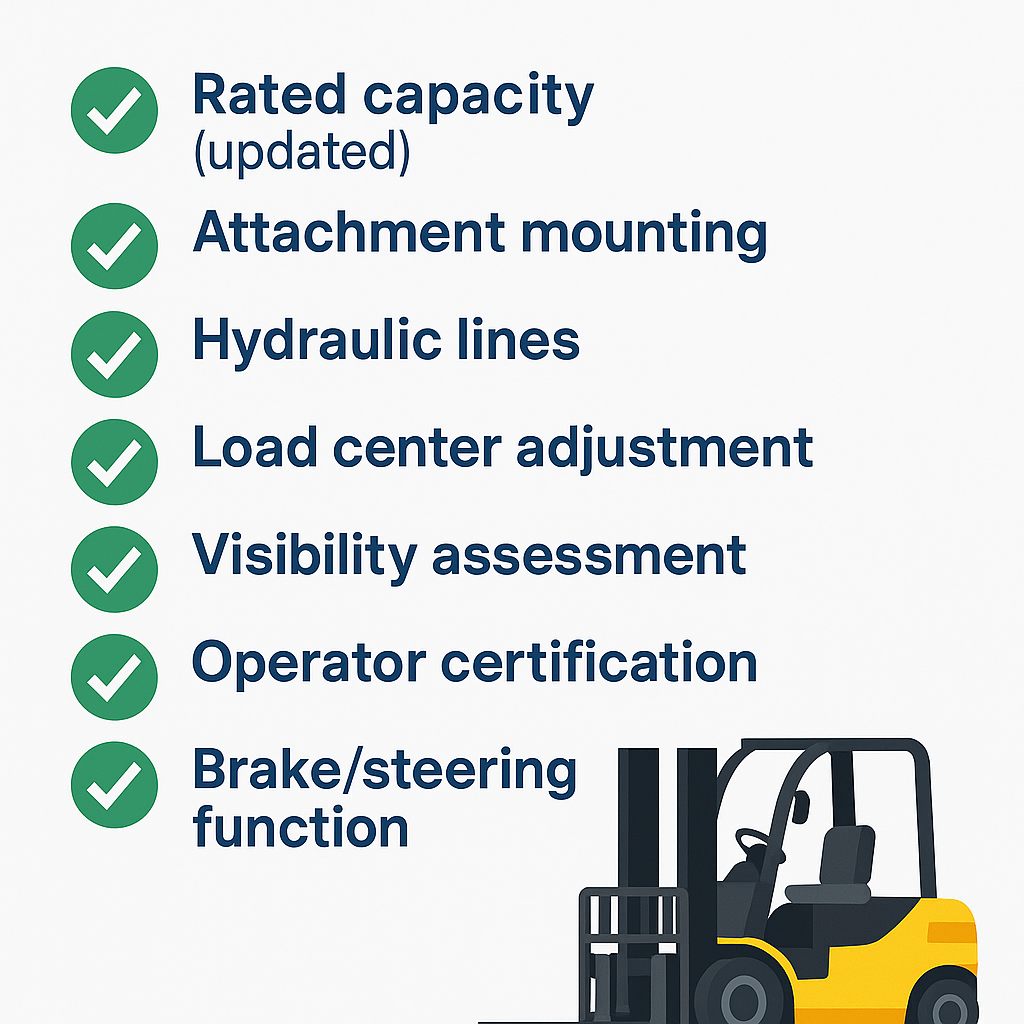
This includes checking:
- Mounting bolts
- Hydraulic connections
- Cylinder movement
- Wear and tear
Use a daily checklist that covers both forklift and attachment parts.
🚫 Common Mistakes That Violate OSHA Rules
❌ Installing attachments without manufacturer approval
❌ Using outdated capacity plates
❌ Failing to train operators on attachment use
❌ Ignoring hydraulic leaks or cracked arms
❌ Allowing untrained employees to operate modified forklifts
✅ Stay OSHA Compliant: 5-Step Checklist
| Step | Action Required |
|---|---|
| 1. Manufacturer Approval | Obtain written approval before installing |
| 2. New Data Plate | Update with correct capacity/load center info |
| 3. Operator Training | Provide hands-on attachment training |
| 4. Daily Inspections | Check attachment components before each shift |
| 5. Recordkeeping | Maintain logs of training and approvals |
🧠 Conclusion: OSHA Demands Safety, Not Guesswork
Using forklift attachments without following OSHA’s rules can lead to:
- Accidents or injuries
- Expensive OSHA fines
- Equipment damage
- Legal liability
But with the right documentation, training, and safety checks, your forklift fleet can operate safely and efficiently — with attachments that expand your capabilities.
📣 Need OSHA-Compliant Forklift Attachments?
Akuros provides CE/ISO-certified forklift attachments with engineering support and installation documentation — making OSHA compliance easy. Whether you need a clamp, rotator, or fork positioner, we’ve got your back.
📩 Contact us today for expert guidance and custom solutions.