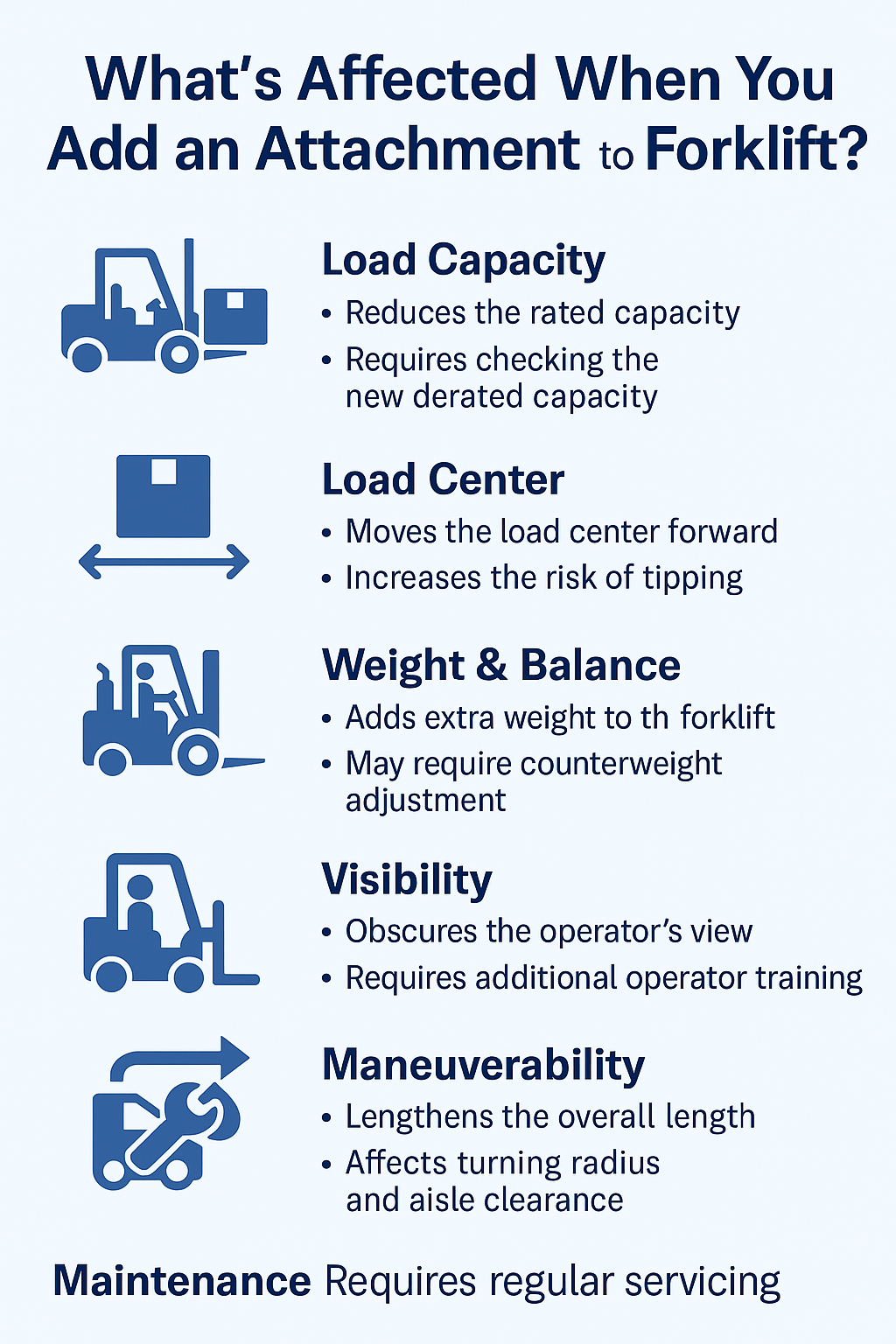
Forklift attachments — such as clamps, rotators, fork positioners, and push-pull devices — significantly increase a forklift’s versatility. However, fitting an attachment is not just a plug-and-play decision. It directly affects several critical aspects of your forklift’s operation, performance, and safety.
In this article, we’ll explore what gets affected when an attachment is added to a forklift, why it matters, and how to manage these changes properly.
🔧 What Is a Forklift Attachment?
A forklift attachment is any additional device mounted to the forks or carriage of a forklift to modify its functionality. Common types include:
- Paper roll clamps
- Bale clamps
- Fork positioners
- Push-pull attachments
- Rotators
- Single-double pallet handlers
These attachments allow forklifts to handle non-palletized loads, increase productivity, and reduce manual labor. But they also introduce operational trade-offs.
🚨 Key Areas Affected When Using Forklift Attachments
1. Load Capacity (Rated Capacity Decrease)
✅ Most significant impact
Adding an attachment increases the overall load center and weight of the front end. This lowers the forklift’s rated load capacity, sometimes by as much as 30–50%.
📌 Example: A 3,000 kg forklift might only lift 2,100 kg after installing a paper roll clamp.
Solution: Always check the derated capacity chart provided by the manufacturer.
2. Load Center
An attachment increases the distance between the load and the front axle, shifting the load center forward.
- This makes the forklift less stable, especially at higher lift heights.
- Risk of tipping increases if not properly managed.
Tip: Use attachments specifically designed with minimized depth to reduce the impact on load center.
3. Overall Weight & Truck Balance
The additional weight of the attachment itself affects:
- Fuel/electricity consumption
- Braking distance
- Tire wear
- Potential need for counterweight adjustment
Recommendation: Ensure your forklift’s chassis and tires can handle the added load and dynamic stress.
4. Visibility
Large or complex attachments (like multi-pallet handlers) can obstruct the operator’s field of view, especially during stacking or maneuvering.
Solution: Train drivers specifically for attachment use and provide camera/laser guidance if necessary.
5. Maneuverability
Attachments often increase the overall length of the forklift, affecting:
- Turning radius
- Aisle width requirements
- Entry clearance
Plan your warehouse layout accordingly, especially for narrow-aisle operations.
6. Maintenance & Wear
Attachments come with hydraulic systems, hoses, and moving parts that require regular inspection and service.
- Increased maintenance frequency
- Risk of hydraulic leakage if improperly maintained
Preventive tip: Use OEM-approved attachments and service them routinely.
⚠️ Compliance & Safety Considerations
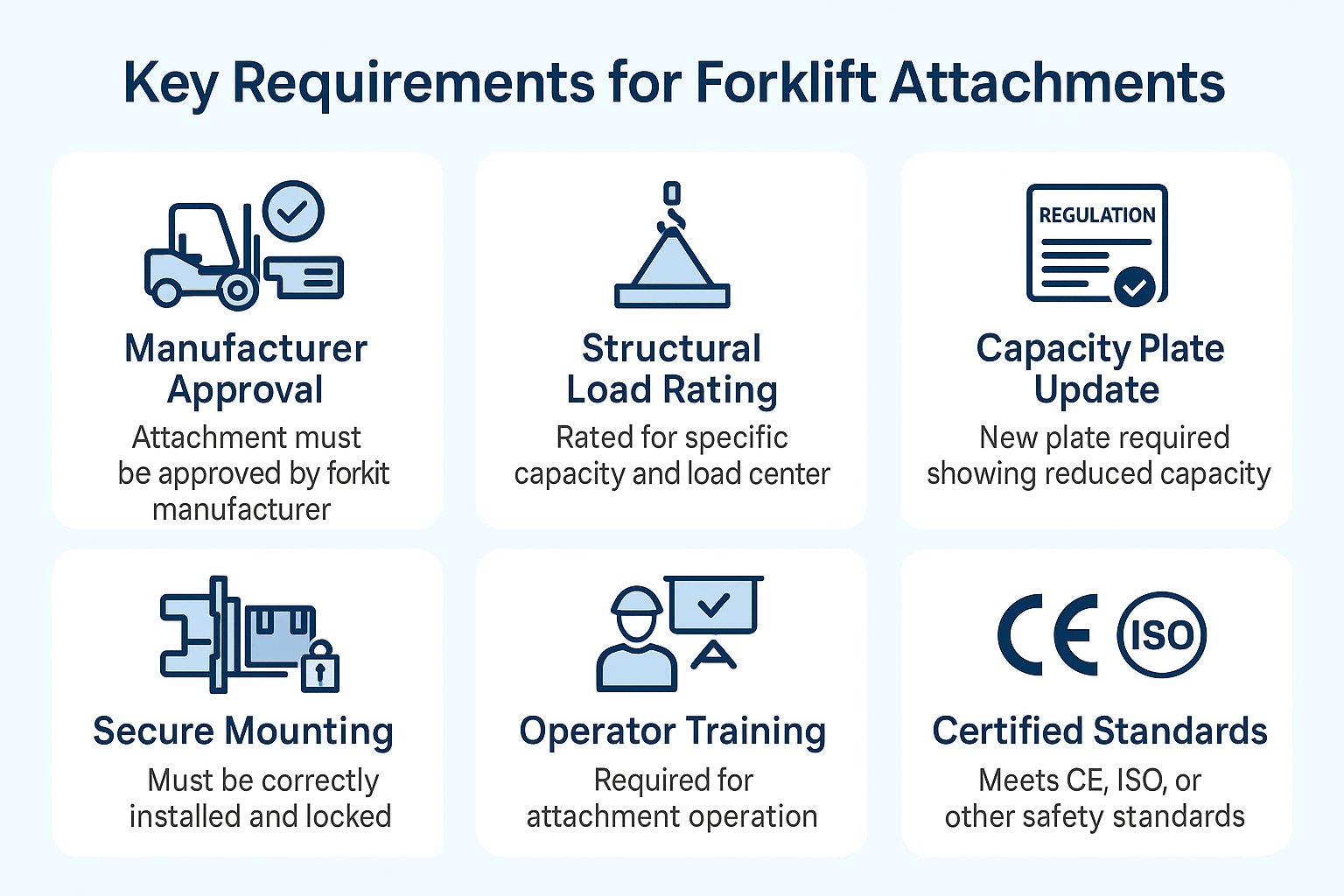
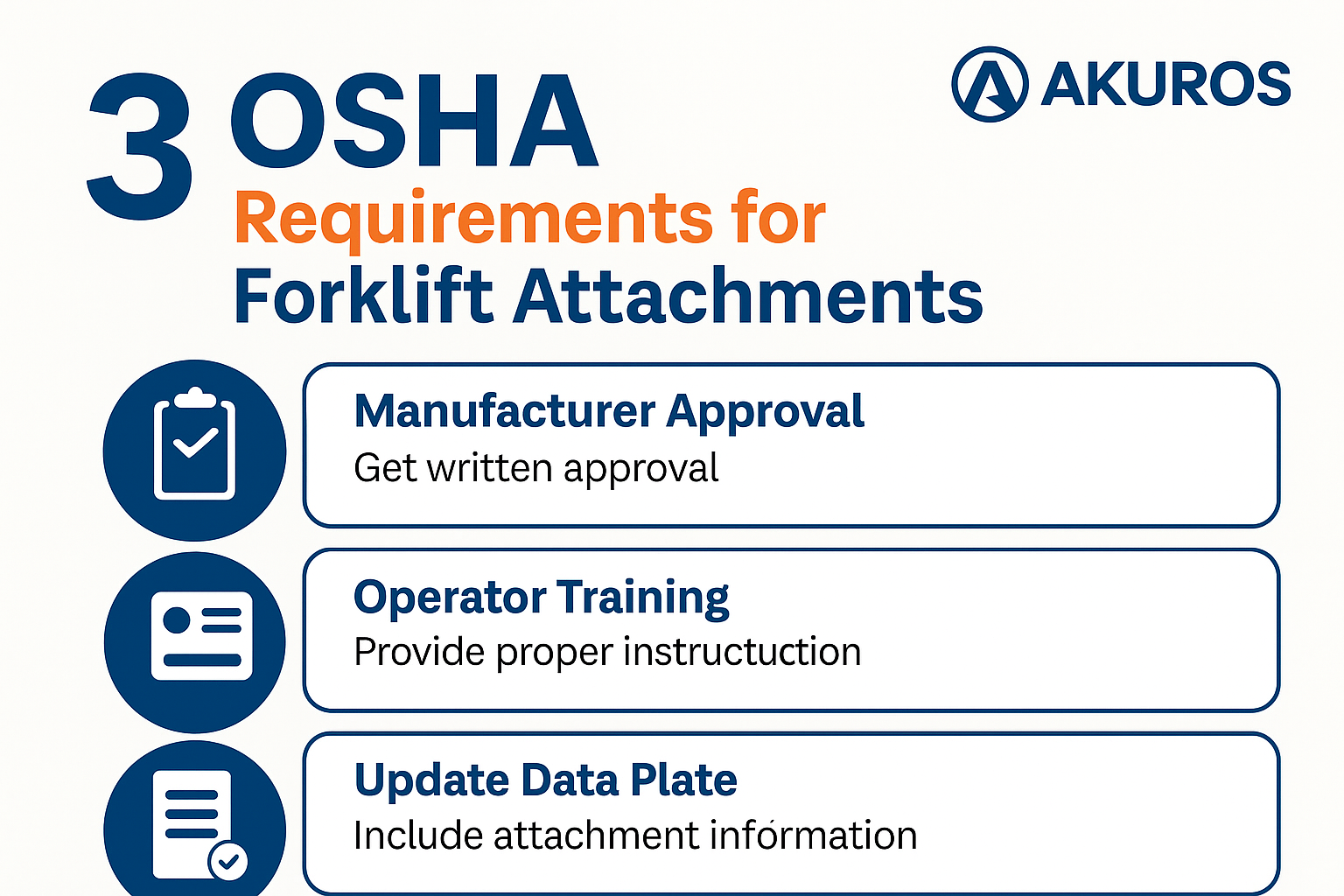
- Always update the data plate to reflect the attachment’s weight and reduced capacity.
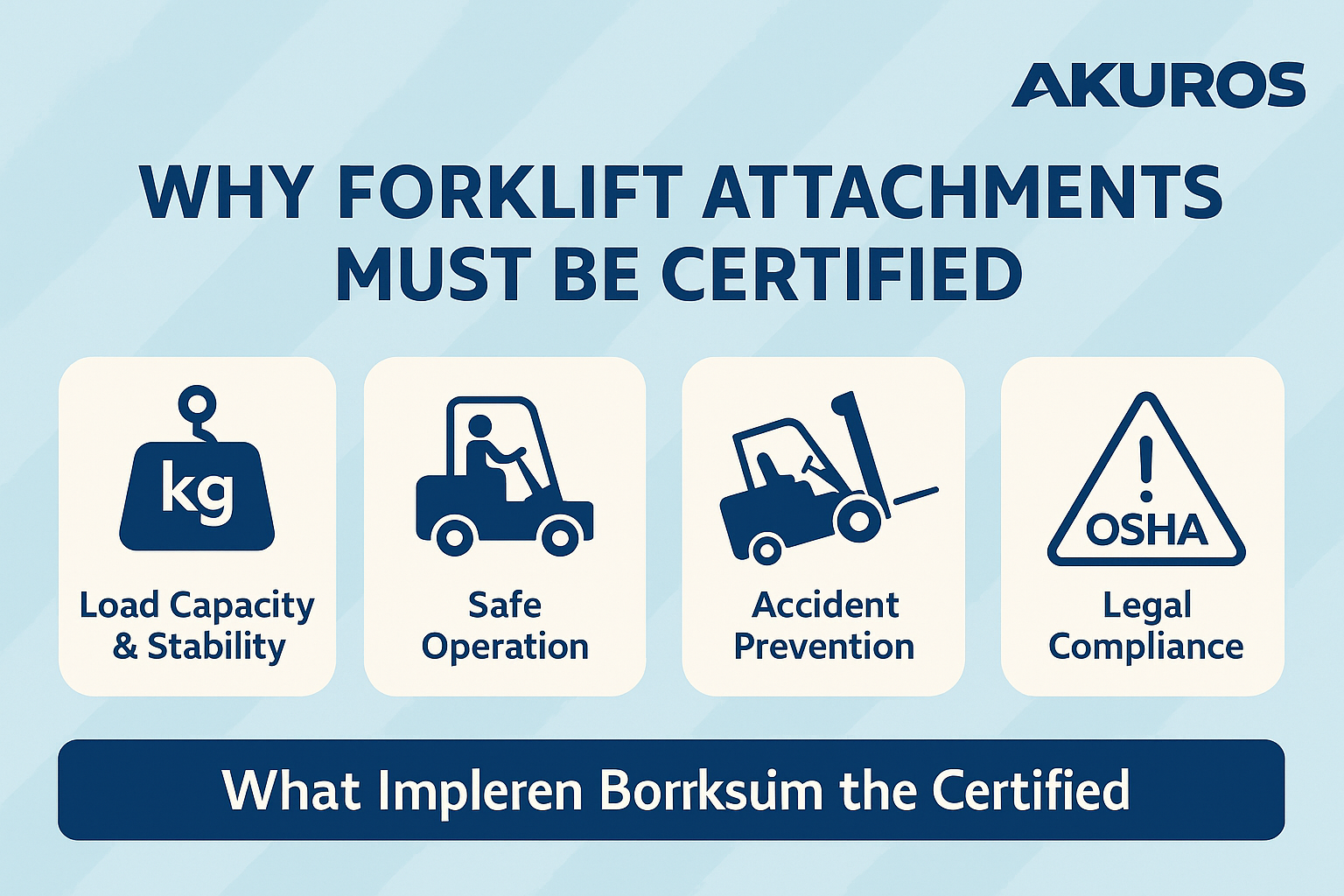
- Follow OSHA/ISO guidelines on attachment use.
- Train all operators on how to use the attachment safely and understand its impact on performance.
✅ Conclusion: Attachments Improve Productivity — With Caution
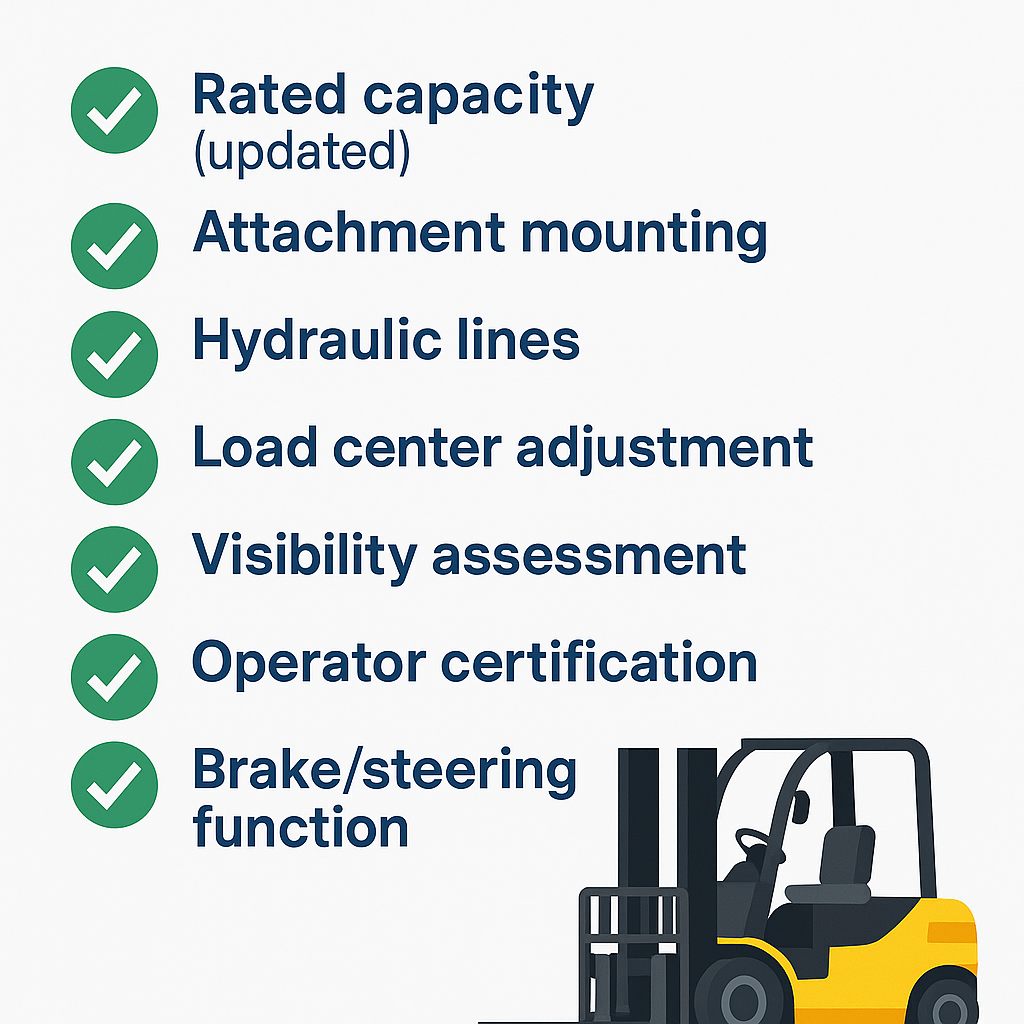
When a forklift attachment is fitted, it affects:
- Load capacity
- Load center
- Balance and weight distribution
- Visibility and maneuverability
- Maintenance demands
To use attachments safely and effectively:
- Choose the right attachment for your forklift model
- Understand the impact on rated capacity and safety
- Rely on professional installation and regular maintenance
📣 Looking to Upgrade Your Forklift with Attachments?
At Akuros, we provide CE-certified, custom-fit forklift attachments for a wide range of industries — from paper handling to food logistics.
📩 Contact us to find the right solution for your operation!