Your forklift is only as reliable as its battery. A weak or failing battery can lead to unplanned downtime, reduced performance, and costly repairs. But how do you know if your forklift battery is bad? In this guide, we’ll walk you through the most common warning signs, testing methods, and what to do next.
🚨 Common Signs of a Bad Forklift Battery
Whether you’re using a lead-acid or lithium-ion battery, these symptoms may indicate a problem:
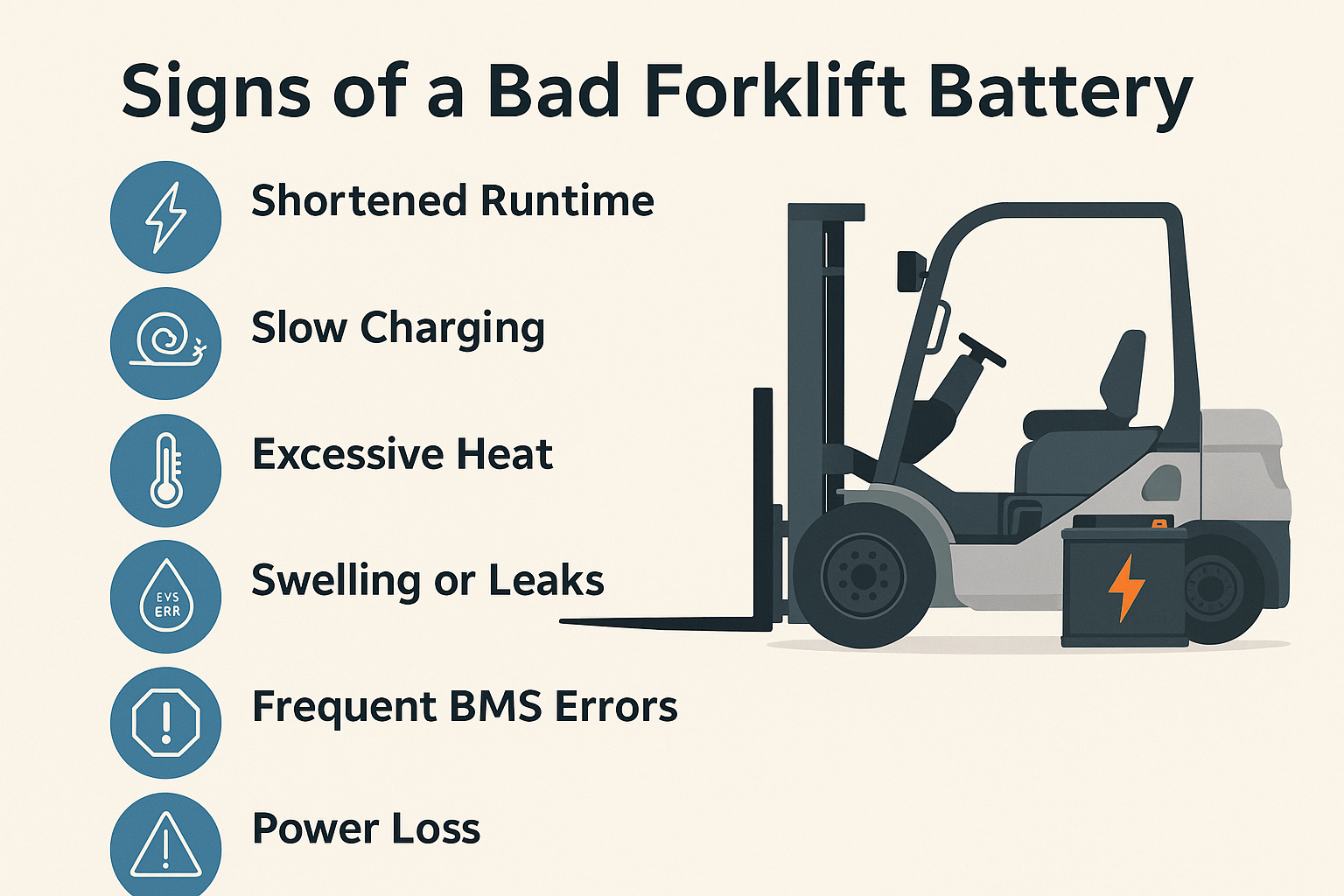
1. Shortened Runtime
If your battery used to last 6–8 hours and now lasts only 1–2 hours, it’s likely nearing the end of its life cycle.
2. Slow Charging
Does your battery take much longer to reach a full charge than before? Aging cells can no longer hold energy efficiently.
3. Excessive Heat During Operation or Charging
Overheating may indicate internal resistance, damaged cells, or chemical imbalance—especially in lead-acid batteries.
4. Swelling, Leaks, or Corrosion
- Lead-acid batteries may show bulging cases, leaking acid, or corroded terminals.
- Lithium batteries may swell or trip BMS (Battery Management System) protections.
5. Frequent BMS Errors (Lithium-Ion)
Frequent alarms or faults from the battery management system mean the battery is under stress or malfunctioning.
6. Forklift Loses Power Unexpectedly
If the forklift shuts off without warning, even at partial charge, the battery may be unable to deliver consistent voltage under load.
🔧 How to Test If a Forklift Battery Is Bad
To accurately diagnose battery health, use the following methods:
| Method | Description |
|---|---|
| Voltage Test | Check open circuit voltage with a multimeter |
| Load Test | Simulate actual use and measure voltage drop |
| Specific Gravity Test (lead-acid) | Check electrolyte density using a hydrometer |
| BMS Diagnostic Tool (lithium-ion) | Read battery error codes, cell balance, temperature |
📌 Tip: If you’re unsure, a qualified forklift technician or battery supplier can perform a full battery assessment.
🔁 How Long Should a Forklift Battery Last?
| Battery Type | Lifespan (Typical) |
|---|---|
| Lead-Acid | 1,200 – 1,500 cycles (3–5 years) |
| Lithium-Ion | 3,000 – 5,000+ cycles (5–10 years) |
If your battery is older than this, or shows multiple warning signs, it may be time for replacement.
🧯 Risks of Using a Bad Battery
- Reduced productivity and runtime
- Damage to the forklift’s electrical system
- Safety risks (acid leaks, overheating, sudden power loss)
- Increased energy costs due to inefficient charging
💡 What to Do If Your Forklift Battery Is Bad
- Stop using the battery immediately if it shows safety hazards (leaks, swelling, overheating).
- Consult your supplier to confirm if the battery is still under warranty.
- Consider upgrading to a lithium-ion battery for longer life, faster charging, and zero maintenance.
🏁 Conclusion
So, how do you know if your forklift battery is bad? Look out for common signs like reduced runtime, charging issues, or physical damage. Performing basic tests and routine inspections can help you catch battery failure early—and avoid costly downtime.
🔋 Need a Reliable Replacement?
At Akuros, we offer high-performance lithium forklift batteries with CE, UL, and UN38.3 certifications, designed to maximize uptime and reduce maintenance costs.
📞 Contact us today for expert battery replacement advice and a tailored quote.