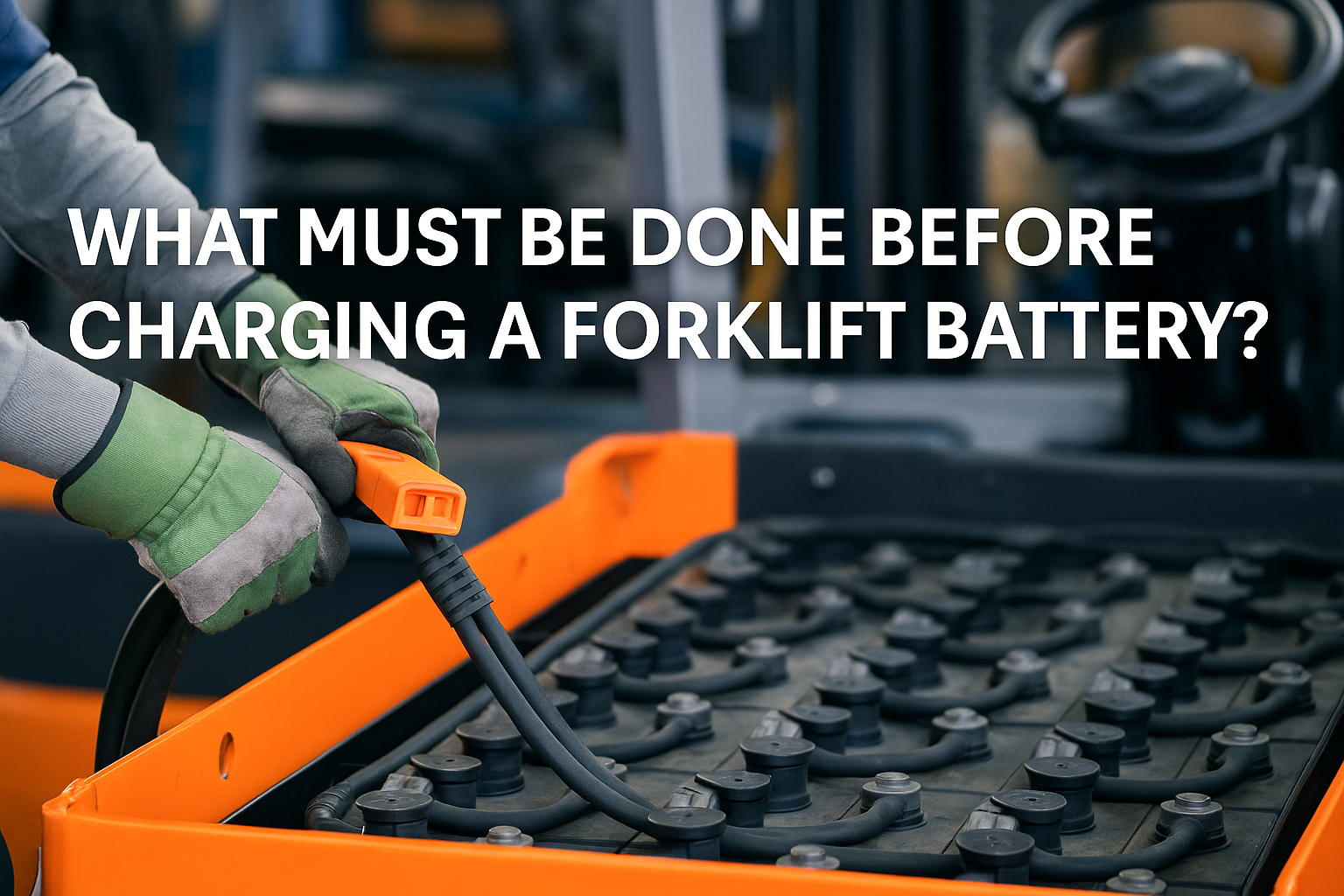
Proper forklift battery maintenance is essential to ensure longevity, safety, and optimal performance. Before charging a forklift battery, several important steps must be taken to prepare the battery and its environment. In this article, we’ll explore what must be done before charging a forklift battery, so your operation remains efficient and safe.
1. Inspect the Battery for Damage or Leaks
Before charging, carefully inspect the battery for any visible signs of wear, corrosion, or leakage. Look for cracks in the casing, damaged cables, or loose connections. If any of these are found, do not proceed with charging until the issue is repaired or the battery is replaced.
2. Check Water Levels (Lead-Acid Batteries Only)
If you’re using a lead-acid forklift battery, it’s critical to check the electrolyte (water) level before charging. The water should be high enough to cover the battery plates but not overfilled. Charging a dry battery can cause serious damage.
💡 Tip: Only use distilled water and never top off after charging—do it before or after (depending on the battery manufacturer’s recommendation).
3. Allow the Battery to Cool
If the battery has just been in use, it may be hot. Always allow it to cool to a safe temperature (generally below 113°F or 45°C) before charging. Overheating can lead to reduced battery life and safety hazards.
4. Ensure Proper Ventilation
Forklift batteries—especially lead-acid types—emit hydrogen gas while charging. Make sure the charging area is well-ventilated to prevent gas buildup, which can lead to explosions. Charging in a confined space is highly discouraged.
5. Use the Correct Charger
Always use a charger that matches the voltage and capacity of your forklift battery. Using the wrong charger may result in undercharging or overcharging, both of which can significantly reduce battery lifespan.
6. Secure the Battery
Before beginning the charge, ensure the battery is securely placed on a level surface and the connections are tight. Loose connections can cause arcing and damage both the battery and charger.
7. Wear Proper Safety Gear
Operators should wear gloves, safety goggles, and acid-resistant clothing during inspection and charging, especially for lead-acid batteries. Safety always comes first.
Final Thoughts
Understanding what must be done before charging a forklift battery helps prolong the battery’s life, protects your equipment, and maintains workplace safety. Whether you use lead-acid or lithium-ion forklift batteries, taking a few minutes to prepare correctly can save time and money in the long run.
Optimize your forklift battery performance today!
Looking for high-quality lithium batteries or complete forklift solutions? Contact Akuros for expert guidance and tailored energy solutions.